

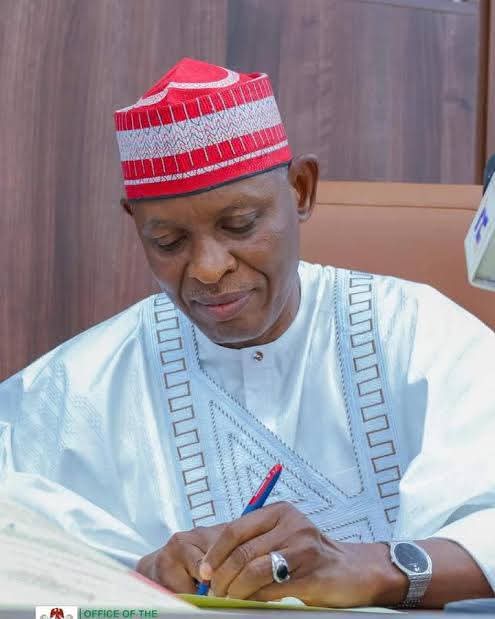
Abba Kabir Yusuf And The Politics Of Strategic Realignment: Why The APC Option Makes Sense
By Comrade Najeeb Nasir Ibrahim
In politics, leadership is measured not by emotional loyalty to platforms, but by the courage to make strategic decisions that protect stability, relevance, and the collective interest of the people. Recent reports indicating that the Executive Governor of Kano State, Abba Kabir Yusuf, may defect from the New Nigeria People’s Party (NNPP) to the All Progressives Congress (APC) should therefore be assessed with political maturity rather than sentiment.
Kano State, Nigeria’s most populous state, occupies a critical position in national politics. Any political decision taken by its governor has implications far beyond party structures—it directly affects governance, development, and Kano’s bargaining power at the federal level.
The Political Reality Behind the Decision
Governor Yusuf emerged under the NNPP, largely supported by the Kwankwasiyya movement. However, evolving political realities—particularly internal divisions within the NNPP and increasing national realignments—have made the status quo difficult to sustain.
The open invitation extended by the APC, reportedly backed by key party stakeholders, reflects recognition of Governor Yusuf’s political weight. More significantly, indications that a large majority of NNPP lawmakers in the Kano State House of Assembly may follow him suggest that this is not an isolated ambition but a calculated collective shift.
Why the APC Alignment Is a Wise Decision
First, alignment with the ruling party at the federal level enhances access to national resources, infrastructure funding, and policy collaboration. In Nigeria’s political system, federal-state harmony often determines the pace and scale of development. Kano cannot afford isolation at the centre.
Second, internal crises within the NNPP have increasingly become a distraction to governance. Political stability is essential for effective leadership. A move to the APC could consolidate political forces, reduce factional conflicts, and allow the governor to focus squarely on service delivery.
Third, with the 2027 general elections approaching, political foresight is essential. The APC’s nationwide structure, institutional depth, and electoral machinery offer a broader and more sustainable platform than a fragmented opposition party. This positioning strengthens both the governor’s future prospects and Kano’s influence in national decision-making.
Fourth, the move could contribute to building a wider northern political coalition—an important factor in shaping national leadership and policy outcomes in Nigeria.
Responding to the Critics
Critics frame the potential defection as a betrayal of loyalty to the Kwankwasiyya movement. While loyalty has its place, governance must always come before political sentiment. Political movements are vehicles for progress, not permanent constraints.
Others raise concerns about ideological inconsistency. However, Nigerian politics has long been shaped by strategic realignments. What ultimately matters is not party branding, but the ability to deliver dividends of democracy to the people.
Implications for Kano Politics
This moment represents a turning point in Kano’s political history. It signals a possible fragmentation of the Kwankwasiyya structure, a redefinition of long-standing political alliances, and a reshaping of opposition strength within the state. More importantly, it underscores early preparations for the decisive 2027 elections.
Conclusion
Governor Abba Kabir Yusuf’s reported move toward the APC should be seen as a strategic and forward-looking political decision, driven by the need for stability, development, and relevance in national politics. While the decision carries political risks, leadership often demands difficult choices.
History will ultimately judge this decision by its outcomes. If Kano secures greater development, stronger federal collaboration, and political stability, then this move will stand as a wise and timely decision made in the best interest of the people.
Comrade Najeeb Nasir Ibrahim is with
Kano Concerned Citizens for Good Governance