
By Engr. Bello Gwarzo-Abdullahi, FNSE
bgabdullahi@gmail.com
28 November 2026
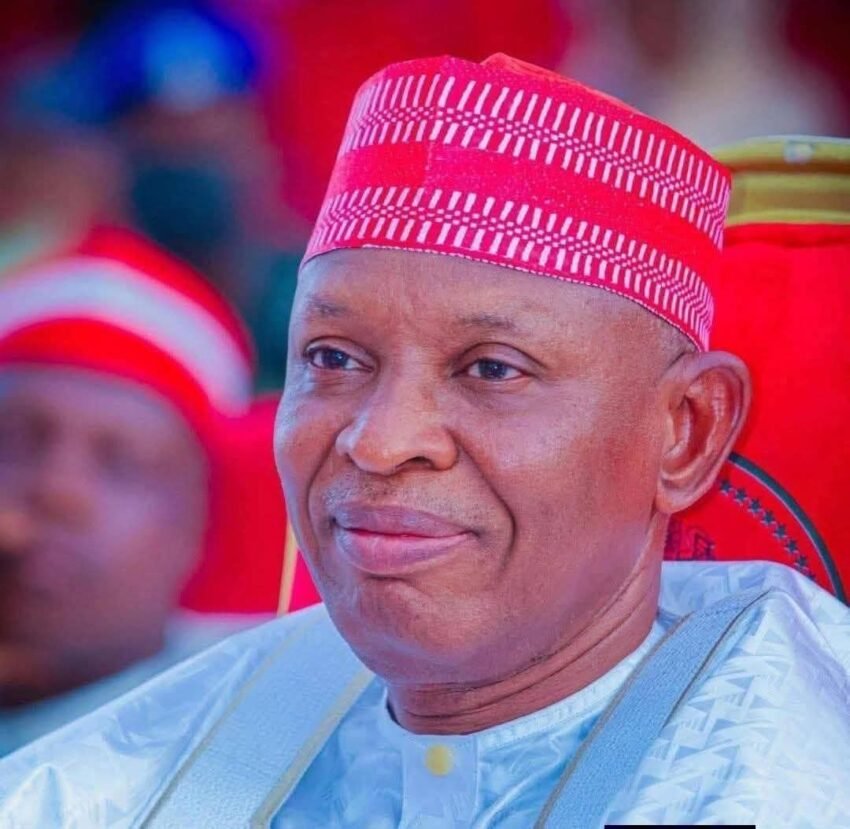
Some political disagreements are routine, but others reveal much more than differences over party affiliation or the pursuit of political power. They expose character, test relationships and raise fundamental questions about trust and leadership. The unfolding confrontation between Senator Rabiu Musa Kwankwaso and his longtime protégé, Governor Abba Kabir Yusuf, belongs firmly in the latter category.
What began as a disagreement over political loyalty has developed into an unfortunate public spectacle involving personal grievances, family relationships, allegations of betrayal, claims of institutional manipulation and questions about the character of those involved.
Yet, the most revealing aspect of this crisis is not Kwankwaso’s anger or even Abba Yusuf’s decision to leave the NNPP for the APC. It is the manner in which the governor has chosen to respond to the controversy and what his words and actions reveal about his judgment, temperament and credibility.
Abba Yusuf may have successfully changed his political platform, but he has not succeeded in convincing many people that he is a man whose word can be trusted. In politics, changing parties is relatively easy. Rebuilding confidence after questions have been raised about one’s loyalty and consistency is considerably more difficult.
Interestingly, those who may find it most difficult to trust him are not necessarily Kwankwaso’s supporters. They may well be the very APC loyalists who spent years fighting Kwankwaso and the Kwankwasiyya Movement. Many of them endured political opposition, personal sacrifices and lost opportunities in that struggle. They may welcome the electoral advantage of having an incumbent governor join their party, but accepting him into their ranks is one thing; entrusting him with the political future of Kano APC is quite another.
This is where Abba Yusuf’s own explanations become particularly problematic. His credibility cannot simply be defended by dismissing every criticism as the bitterness of a former political benefactor. The questions being raised are legitimate, and his public statements have, unfortunately, created more uncertainty than reassurance.
To appreciate the gravity of the present situation, one must understand the history between these two men. By Kwankwaso’s account, their relationship spans approximately 43 years. Abba Yusuf served as his Personal Assistant, Principal Private Secretary and, in 2011, Commissioner for Works, Housing and Transport. In 2018, Kwankwaso backed him for the governorship. When Abba lost the controversial 2019 supplementary election in Gama, his political mentor did not abandon him. Instead, he supported his return as the NNPP candidate in 2023, when he eventually defeated the APC candidate, Nasiru Gawuna, in a victory finally affirmed by the Supreme Court on 12 January 2024.
Their relationship was not limited to politics. In 2006, Abba married Zainab, the daughter of Kwankwaso’s elder brother, who was raised in Kwankwaso’s household. In our cultural setting, this made their relationship much deeper than the ordinary bond between a political benefactor and his protégé. Kwankwaso was his political mentor, benefactor, family elder and, in many respects, a father figure.
Of course, no political mentor owns the future of someone he has helped. A younger politician has every right to grow, develop independent political ambitions and make decisions that differ from those of his benefactor. But independence does not require ingratitude, just as disagreement does not justify disrespect. Where relationships have been built over decades, there is an obligation to handle differences with honesty, dignity and restraint.
The disagreement did not suddenly emerge on 23 January 2026, when Abba formally resigned from the NNPP. Its roots appear to go back to the political manoeuvrings surrounding the 2023–2024 post-election period.
The governor now claims that Kwankwaso personally sent him to President Bola Tinubu during the legal battles that followed the election, with an understanding that both men would eventually move to the APC together. He further alleges that Kwankwaso required him to swear by the Holy Qur’an to confirm their agreement. The Kwankwasiyya camp has strongly denied this account and challenged the governor to produce evidence.
Without independent evidence, it would be premature to pronounce a definitive judgment on what transpired behind closed doors. Nevertheless, the public deserves a clear explanation, particularly because the governor himself has repeatedly introduced this alleged agreement into the debate.
There were already indications of growing tension before the eventual defection. By mid-2024, the emergence of the Abba Tsaya da Kafarka movement, which encouraged the governor to stand on his own feet, suggested that the relationship was becoming increasingly strained. At the time, Abba publicly dismissed suggestions that he would abandon Kwankwaso. By 2025, however, rumours of his impending defection had become widespread.
The breaking point came in January 2026. While Kwankwaso reportedly wanted greater clarity about the political arrangements and the future of their shared structure before making any move, Abba resigned from the NNPP on 23 January and was formally received into the APC three days later.
The symbolism of the occasion was difficult to ignore. Abdullahi Ganduje, Kwankwaso’s most formidable political rival, was among those who welcomed the governor, alongside defecting lawmakers and all 44 local government chairmen. For Kwankwaso, this was not simply a political disagreement. He described the date as “World Betrayal Day.”
Since then, the political divisions have become more pronounced. Deputy Governor Aminu Abdussalam Gwarzo declined to follow the governor into the APC and subsequently resigned on 27 March, paving the way for Murtala Sule Garo. Kwankwaso, meanwhile, moved from the ADC to the NDC and emerged as Peter Obi’s presidential running mate. The two men who once shared a common political destiny now find themselves on opposite sides of the political divide, both in Kano and at the national level.
There is nothing inherently wrong with a politician changing political parties. The right to political association is fundamental in a democracy. However, the manner in which such a decision is taken, the explanations offered and the treatment of those who helped build one’s political career are matters of character and public judgment.
Unfortunately, Abba Yusuf’s recent conduct has taken this disagreement into an even more sensitive and troubling territory: his marriage.
Reports emerged that Zainab had approached an Upper Area Court in Gudu, Abuja, in Case CV/97/26, seeking a dissolution of her marriage through khul’, offering to refund her dowry. The matter was reportedly adjourned to 15 December. On 16 November, while addressing pensioners at the Government House in Kano, the governor publicly confirmed that he had granted the divorce.
What followed was particularly unfortunate. He joked that he had been demoted from corporal to constable because he now had only one wife, adding that he might marry again.
One would have expected a matter involving the dissolution of a marriage of approximately twenty years, and a family blessed with six children, to be handled with greater sensitivity. Marriage is a deeply personal institution, and its dissolution can be painful even when both parties believe it is the best available option. It is certainly not an occasion that calls for public jokes, particularly from someone occupying the highest political office in a state.
Six days later, during an interview with BBC Hausa, the governor went further. He alleged that his wife’s belongings had been packed and that she was taken away without his knowledge. He accused Kwankwaso of orchestrating the court proceedings in Abuja and went as far as discussing details of Zainab’s previous marriage. He also repeated his account of the alleged Qur’anic oath and claimed that the agreement between him and Kwankwaso collapsed after the latter criticised President Tinubu during a radio interview.
This was where the governor’s response became particularly difficult to defend.
Even if he felt betrayed, embarrassed or unfairly treated, there were better ways to address his grievances. Family elders, religious leaders and trusted intermediaries could have been approached to resolve the matter privately. Taking intimate family issues to a national radio audience was unnecessary and, in my view, demonstrated a serious lack of restraint.
Zainab is not merely the wife from whom the governor is now separated. She is the mother of his six children and a member of the same extended family that has been drawn into this political dispute. Whatever differences exist between the adults, her dignity deserves protection. She should not become collateral damage in a political disagreement between her husband and her uncle.
More importantly, the children must live with the consequences of what is being said publicly. They will read the reports, hear the discussions and encounter the comments that follow. Political disagreements eventually fade, but the emotional consequences of public humiliation within a family can endure for years.
Our Hausa and Fulani cultures place considerable value on kunya (modesty), hakuri (patience) and mutunci (dignity). These are not signs of weakness. They are qualities that distinguish maturity from impulsiveness. Islam equally teaches that even when a marriage cannot continue, the separation should be handled honourably. Surah al-Baqarah (2:229) speaks of retaining a marriage with fairness or parting with kindness, while Surah an-Nisa (4:19) commands believers to treat their wives with kindness.
Khul’ is a recognised right of a woman under Islamic law. A woman exercising that right should not be subjected to public embarrassment or ridicule. Equally, a husband who feels aggrieved should be able to express his concerns without compromising the dignity of his family.
The conduct expected of an ordinary citizen is not diminished by occupying public office. If anything, public leadership demands a higher degree of self-control. A governor’s words carry weight, and his conduct inevitably influences how others perceive acceptable behaviour in society.
Then came Kwankwaso’s lengthy response on 27 November, adding another dimension to an already complicated controversy.
Accusing the governor of betraying 43 years of trust, Kwankwaso alleged that Abba had petitioned the Economic and Financial Crimes Commission against him months earlier and sponsored a group, the Society for Anti-Corruption and Good Governance Initiative, to organise protests at the commission’s headquarters. He further alleged that there were attempts to manipulate INEC and the courts to prevent Aminu Abdussalam from participating in the governorship race.
These are serious allegations, and they should not be accepted as established facts merely because they were made by Kwankwaso. He must provide credible evidence to support them, just as the governor deserves an opportunity to respond. The EFCC, INEC and the judiciary must remain independent and must never become instruments in the political battles of competing individuals or factions.
However, beyond the accusations and counter-accusations lies a more fundamental problem for Abba Yusuf: his credibility within the very political party he has now joined.
His own narrative has created an uncomfortable dilemma for his new political associates. If his account is true, APC members must accept that their new political leader was, until recently, closely bound to Kwankwaso by a political understanding that allegedly involved a secret agreement with the Presidency and an oath sworn on the Holy Qur’an. They must also ask why such an arrangement was not openly explained before the defection.
On the other hand, if Kwankwaso’s account is substantially correct, then the APC is welcoming a former protégé accused of abandoning a relationship built over four decades, betraying a political benefactor and possibly using state institutions to settle personal scores.
Neither explanation offers much comfort to APC loyalists.
This is the central contradiction that Abba Yusuf has yet to resolve. His attempt to justify his political independence has repeatedly drawn attention to the extent of his former dependence on Kwankwaso. Instead of reassuring his new political associates, his explanations have left them with more questions about his judgment and consistency.
Even his repeated invocation of the Holy Qur’an in support of the alleged political agreement has not helped matters. Such a serious claim requires more than repeated references to an oath. The governor should be able to provide clear details of when the agreement was made, who was present and what exactly was agreed. Otherwise, the reference risks becoming another source of public scepticism rather than proof of his position.
The truth is that political parties are not built on the number of elected officials who defect into them. They are built on trust, shared sacrifices, mutual respect and a common sense of purpose. An incumbent governor arriving with lawmakers and all 44 local government chairmen may substantially improve a party’s electoral arithmetic, but that does not automatically translate into the loyalty of its longstanding members or the confidence of its grassroots.
Those who fought Kwankwaso for years may have their own reservations about accepting his former protégé as their political leader. They may be prepared to work with him for electoral convenience, but political cooperation is not the same as personal trust. The distinction is important, particularly in a state like Kano, where political loyalty, grassroots structures and long-established relationships have always played decisive roles.
The APC leadership must therefore look beyond the immediate excitement of welcoming an incumbent governor. It must ask whether this new political arrangement is founded on genuine understanding and mutual confidence or merely on temporary convenience and the calculations of political survival.
Abba Yusuf, for his part, must understand that political independence is demonstrated through responsible leadership, not through repeated public declarations of separation from a former mentor. A leader does not become independent simply because he changes political allegiance. He earns that distinction through consistency, fairness, sound judgment and the ability to command respect across political divides.
Ultimately, neither Abba Yusuf nor Kwankwaso should allow their personal disagreement to become more important than the interests of Kano State. Abba is the sitting governor and has a constitutional responsibility to govern every citizen, irrespective of political affiliation. His attention should be firmly on the challenges confronting the state, not on an endless exchange of accusations with a former benefactor.
The people of Kano are worried about the rising cost of living, unemployment, insecurity, inadequate healthcare, educational challenges and the general difficulty of making ends meet. Pensioners want their entitlements paid. Young people want opportunities to build decent lives. Parents want their children to receive quality education. Communities want security, functioning infrastructure and responsible governance.
These are the issues that should command the governor’s attention and dominate public discourse.
There is a lesson here for both men. Kwankwaso must recognise that political mentorship cannot confer permanent ownership over another person’s choices. Abba must equally recognise that the freedom to make independent political decisions does not absolve him of the responsibility to act with honesty, gratitude and restraint.
But the immediate political burden rests more heavily on the governor. He is the one who has moved into a new political family and must now convince its members that he can be trusted. He cannot expect longstanding APC loyalists to forget their years of political struggle simply because he has arrived with the advantages of incumbency.
At the end of the day, Abba Yusuf’s greatest challenge may not be how to defeat Kwankwaso politically. It may be how to convince those who spent years opposing Kwankwaso that he is someone they can confidently entrust with their own political future.
A man may change his political home overnight, but he cannot demand that others forget his history or trust him without question. Political loyalty may be negotiated, but credibility must be earned. And in the unfolding Kano political drama, that is the burden Abba Yusuf must now carry.