

By Shehu Mustapha Chaji_
There is an old saying that people believe what they see more readily than what they hear. In today’s world of politics, where every policy is contested and every government project is interpreted through partisan lenses, that wisdom has become even more relevant.
Press releases can be questioned. Political speeches can be dismissed. Social media campaigns can be manipulated. But standing before a bridge under construction, walking through a railway corridor, or watching engineers at work tells a different story.
That simple philosophy defined the tour after the 2026 Arewa Media Summit. It was not merely another gathering of journalists and communication professionals. It was an ambitious attempt to move public discourse away from speculation and towards evidence. Instead of asking participants to accept official claims, the summit challenged them to leave the conference hall and see things for themselves.
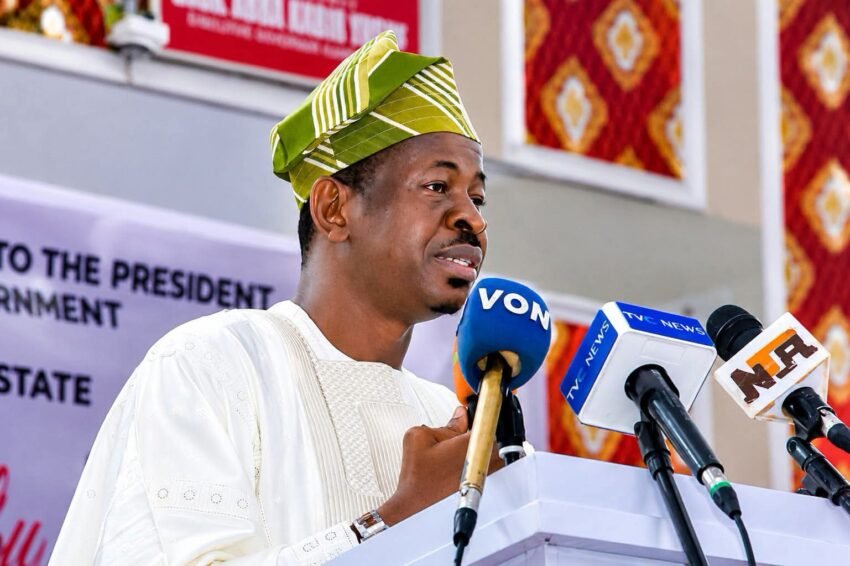
Convened by the Senior Special Assistant to President Bola Ahmed Tinubu on Media and Public Enlightenment, Malam Abdulaziz Abdulaziz, the summit brought together more than 1,500 participants from across Northern Nigeria. Journalists, editors, broadcasters, media executives, academics, filmmakers, social media influencers, digital creators, youth leaders, civil society organisations and communication professionals assembled in Kano to discuss the future of media, governance and public communication. Millions more followed the discussions through television, radio broadcasts and online streaming platforms.
The summit was never intended to end with speeches. It was designed to answer one important question: How can citizens fairly assess Tinubu’s Renewed Hope Agenda if they only encounter it through political arguments rather than firsthand observation?
That question matters because Northern Nigeria has increasingly become the subject of competing narratives. Critics argue that the region has not benefited sufficiently from the current administration, while supporters point to major infrastructure investments across transport, agriculture, housing, energy and healthcare. Between those competing positions sits the ordinary citizen, often forced to choose which narrative to believe without ever seeing the projects themselves.
Abdulaziz Abdulaziz chose a different path. Instead of organising another media briefing, he introduced Gani Ya Kori Ji: “Seeing is Believing.” It was perhaps the summit’s most innovative idea. Rather than relying on government presentations, participants boarded buses and travelled across Kano, Katsina, Kaduna and Abuja to inspect projects firsthand. In doing so, the summit transformed communication into verification and journalism into direct observation.
The exercise also reflected one of journalism’s oldest principles: the closer reporters are to events, the better their reporting becomes.
The first stop demonstrated how healthcare infrastructure is increasingly becoming part of national development planning. At Aminu Kano Teaching Hospital, participants inspected the ongoing installation of solar power infrastructure. Reliable electricity remains one of the biggest challenges facing public hospitals across Nigeria. By reducing dependence on unstable electricity supply, the project is expected to improve medical services, preserve essential equipment and reduce operational costs. For journalists covering healthcare, the visit offered something statistics alone could never provide: context.
From healthcare, the delegation moved to agriculture, the sector that remains the economic backbone of Northern Nigeria. At the Challawa Irrigation Project in Karaye Local Government Area, supervised by the Hadejia–Jama’are River Basin Development Authority, participants witnessed efforts aimed at expanding irrigation farming and improving water management. In a region increasingly affected by climate change and irregular rainfall, irrigation infrastructure represents far more than engineering. It is an investment in food security, rural livelihoods and long-term agricultural resilience.
Transportation formed another major theme of the inspection tour. The delegation visited the Northern Bypass Highway, a strategic road network linking Hadejia to Kano and Kano to Katsina. Beyond reducing travel time, such corridors are expected to facilitate commerce, improve the movement of agricultural produce and strengthen economic integration across Northern Nigeria. Roads rarely dominate political conversations, yet they remain among the most important drivers of regional development.
Participants also inspected the ongoing Kano-Maradi Railway, one of the administration’s flagship regional transport projects. Once completed, the railway is expected to strengthen trade between Nigeria and the Niger Republic while reducing pressure on road transportation. For a commercial city like Kano, improved rail connectivity could reshape regional trade patterns for decades.
Housing represented another important dimension of the tour. At Renewed Hope City in Janguza, participants observed ongoing construction designed to expand access to affordable housing while supporting urban development. Beyond providing residential units, such projects stimulate employment across construction, manufacturing and related industries, illustrating how infrastructure investment often generates wider economic activity.
Innovation and technology were equally prominent. The delegation visited the NASENI Sustainable and Emerging Technology Development Institute (SETDI) located within Bayero University Kano. The institute is expected to strengthen Nigeria’s research ecosystem, promote industrial innovation and develop indigenous technological capacity. In a global economy increasingly driven by knowledge and innovation, investments of this nature may prove just as consequential as roads and bridges.
Energy infrastructure occupied a significant portion of the inspection tour. Participants travelled to inspect the Ajaokuta-Kaduna-Kano (AKK) Gas Pipeline Project, one of Nigeria’s most ambitious energy investments. The pipeline is expected to support industrial growth, improve domestic gas utilisation and stimulate manufacturing across Northern Nigeria. Projects of this scale rarely produce immediate political dividends, but their long-term economic implications can reshape entire regions.
The delegation also inspected ongoing reconstruction work on the Kano-Kaduna-Abuja Expressway, a corridor that serves as one of Northern Nigeria’s busiest transport routes. Every day, thousands of passengers, traders and transport operators depend on the highway. Its reconstruction therefore carries significance not only for commuters but also for regional commerce and national logistics.
The inspection continued along the Zaria-Funtua-Sheme Road, another critical transport corridor designed to improve connectivity between communities and commercial centres. Participants observed the scale of ongoing work and the engineering efforts required to modernise infrastructure that has served Northern Nigeria for decades.
Closely connected was the inspection of the Zaria-Funtua-Gusau-Sokoto Road, another strategic highway whose reconstruction is expected to facilitate movement across the North-West while supporting economic activities that depend on efficient transportation networks.
In Kaduna, participants toured the Kaduna Western Bypass, a project intended to ease congestion within the city while improving traffic flow for vehicles travelling through the state. Such bypasses rarely receive the same public attention as airports or railways, yet they often produce enormous economic benefits by reducing travel delays and improving logistics.
The journey then shifted towards Nigeria’s ongoing energy transition. At Greenville LNG in Kaduna, participants observed firsthand how the Federal Government’s Compressed Natural Gas (CNG) initiative is being implemented. As Nigeria seeks cleaner and more affordable alternatives to conventional fuels, investments in gas infrastructure are expected to reduce transportation costs while supporting broader energy security objectives.
The final federal project on the tour demonstrated the scale of the administration’s long-term ambitions. Participants visited the ongoing construction of the Abuja Independent Power Plant (AIPP), designed to generate approximately 1,600 megawatts of electricity. Linked to the AKK Gas Pipeline, the project represents an effort to strengthen Nigeria’s electricity supply while addressing one of the country’s most persistent constraints to economic growth. Reliable power remains central to industrialisation, investment and job creation.
The delegation’s journey did not end with federal projects alone. Participants also inspected completed and ongoing development projects executed by the Kano and Kaduna State Governments, reinforcing an important lesson: national development is rarely the responsibility of one institution. Progress depends on collaboration between the Federal Government and sub-national governments working towards complementary objectives.
By the end of the inspection tour, many participants had travelled hundreds of kilometres across multiple states. They had spoken with engineers, questioned contractors, interviewed project managers and documented their observations independently. They returned not merely with photographs but with experience, an experience that no political debate could substitute.
That may ultimately become the greatest contribution of Abdulaziz Abdulaziz and the Arewa Media Summit.
In an era where misinformation spreads rapidly and political narratives often compete with facts, Gani Ya Kori Ji demonstrated a different model of public communication. It recognised that governments should not merely tell citizens what they are doing. They should create opportunities for citizens to verify those claims themselves. Transparency becomes meaningful only when access accompanies information.
The summit also offered an important lesson for journalism. Balanced reporting does not mean ignoring insecurity, poverty or governance failures. Those issues remain real and deserve sustained scrutiny. But balance also requires acknowledging development where it exists. Roads under construction, hospitals being upgraded, railways advancing, gas pipelines expanding, technology institutes emerging and power plants rising from the ground are all part of Northern Nigeria’s evolving story. Leaving them out would be just as incomplete as ignoring the region’s challenges.
Even after four days of travel, participants acknowledged that they had only seen a fraction of ongoing projects. Northern Nigeria is currently witnessing infrastructure development across sectors that would require weeks, perhaps even months, to inspect comprehensively. That reality alone underscores the scale of ongoing investment under both the Federal Government and several state administrations.
For that reason, the Gani Ya Kori Ji initiative deserves to become more than a one-off event. It should evolve into a regular platform through which journalists, researchers, civil society organisations and citizens can independently inspect public projects, ask difficult questions and report their findings without fear or favour.
Ultimately, the success of Tinubu’s Renewed Hope Agenda will not be determined by speeches, campaign slogans or political arguments. It will be judged by outcomes that ordinary Nigerians can see, measure and experience in their daily lives.
The 2026 Arewa Media Summit reminded everyone that democracy functions best when governments are willing to open their work to scrutiny, journalists are willing to leave their desks in search of evidence, and citizens are encouraged to judge performance not through rumours but through reality.
Sometimes, the shortest distance between government and the people is not another press conference. It is a journey.
_Shehu Mustapha Chaji_
_wrote from Kano_