

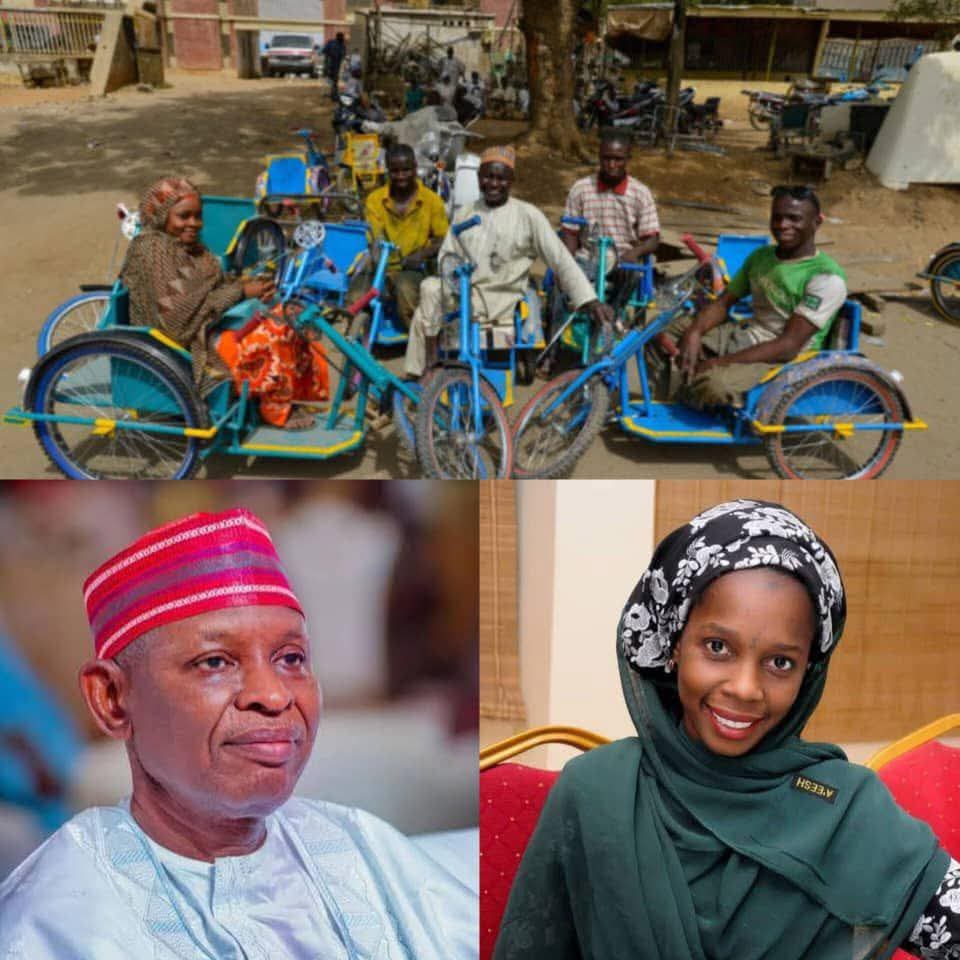
During the review of the New Nigeria Peoples Party (NNPP) blueprint at Babale Suite organized by AMG foundation, the current Director General of Media, Malam Sanusi Bature who represent the gubertorial candidate of the part Engr Abba Kabir yusuf , I vividly recall a series of engagements we had on intended to established the Commission for Persons with Disabilities/special needs if elected.
Following the election, advocates for persons with disabilities eagerly awaited for the commission the Expectations were high, as this step was widely seen as critical to advancing inclusion and protecting the rights of persons with disabilities across Kano State.
On 28 December 2023, Press release was issued to the public by the DG media Sanusi Bature which announced that, the Kano State Government was set to establish the commission by 2024 and reaffirmed its commitment to improving the lives of persons with disabilities through the representation of the governor by his Deputy comrade Aminu Abdussalam Gwarzo .
In the meantime, the Commissioner for Women, Children, and Special Needs, Hajiya Amina Abdullahi (HOD), has continued to carry persons with disabilities along in her activities, promoting inclusivity through the Director of Special Needs, Dr Binta Bala . These efforts are commendable and demonstrate goodwill toward inclusions.
Similarly, the Governor Engr Abba Kabir Yusuf has personally participated in several interventions supporting persons with disabilities—an effort I can attest to as a firsthand witness.
However, the critical question remains: do these interventions adequately replace the role of a fully established commission that serves all disability clusters?
The establishment of a Commission for Persons with Disabilities is essential for bridging existing gaps in government interventions and ensuring coordinated, equitable support across all clusters of disability.
A commission provides structure, continuity, accountability, and representation—elements that isolated interventions alone cannot guarantee.
Due to the non-establishment of the commission, many persons with disabilities in Kano State continue to face persistent challenges, particularly in health care access, education, entrepreneurship, and other social development.
If Kano State successfully domesticates and operationalises this law, it could set a powerful precedent for other northern states to follow—some of which are already making efforts, but without a strong, unified model to emulate.
As an advocate for marginalized groups, I have had several conversations with stakeholders, particularly Abdulrazak Ado Zango, on how impactful the commission would be for persons with disabilities in Kano State.
Beyond service delivery, a commission would serve as a formal platform for inclusion in policymaking and decision-making processes affecting persons with disabilities in the state.
While I sincerely appreciate the government’s efforts in giving persons with disabilities a voice, it is important to emphasize that the establishment of the commission remains the most effective and sustainable path toward meaningful change and full inclusion in Kano State.
Hannatu Suleiman Abba is a Humanitarian Journalist and also
Founder of Beyond Inclusion Media. She can be reach through hannatusuleimanabba@gmail.com.
Hannatu Suleiman Abba