

By Hadiza Musa
The lead project officer of Connected Development’s Follow The Money initiative, Muhammad Gimba, has called for stronger monitoring of the Basic Health Care Provision Fund (BHCPF) implementation in Kano State, saying improved accountability will ensure better health outcomes at the grassroots.
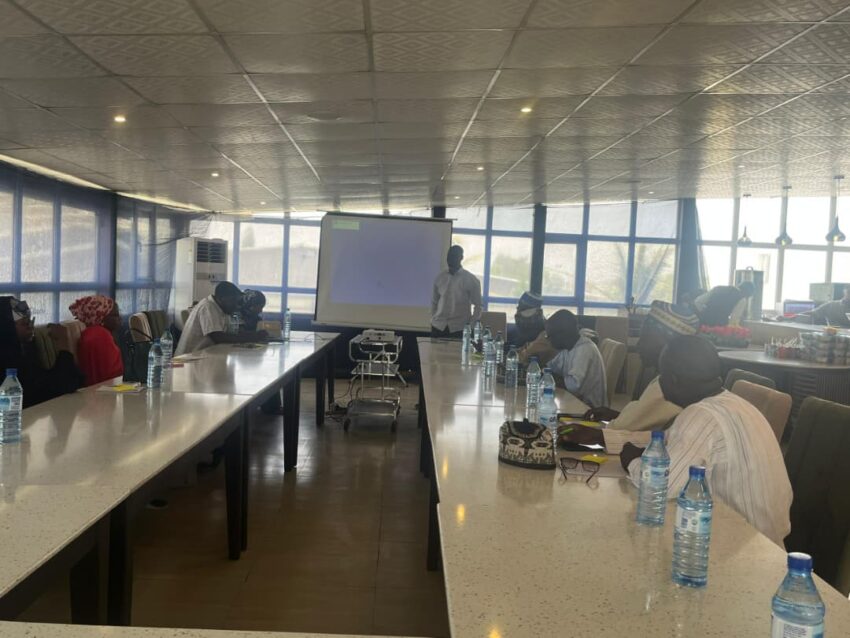
Gimba made the call during a capacity building session in the three-day capstone engagement in Kano.
He explained that the exercise included a Key Informant Interview with state officials, advocacy visits, and capacity building sessions aimed at strengthening transparency in the health sector.
“The Capstone Projects under Follow The Money 2.0 are designed to track how BHCPF is implemented and to strengthen accountability within the health financing system,” he said.
He noted that while Kano has existing structures supporting health security, more attention is needed to ensure funds reach intended projects and vulnerable communities benefit fully.
“We are engaging stakeholders to ensure that health security structures like the NCDC gateway and BHCPF mechanisms are properly understood, effectively monitored, and that citizens can also track these projects,” Gimba added.
Kano faces delays in health preparedness funding despite releases – Epidemiologist
Also speaking, the State Epidemiologist, Dr. Suleiman Illiyasu, during a Key Informant Interview session conducted, raised concern over delays in accessing and fully utilising health emergency preparedness funds, despite regular releases from the national level.
He explained that although funds under the Basic Health Care Provision Fund (BHCPF) are released from the national level on a quarterly basis, accessing and fully utilising them at the state level is delayed by administrative processes and technical requirements.
“For the BHCPF, the funds are released quarterly from the national level. But before you can access the next tranche, you must retire the previous one and meet all requirements,” he said.
Dr. Illiyasu disclosed that Kano State first accessed the funds in the first quarter of 2022 under the NCDC gateway, but said subsequent releases have been affected by documentation and compliance procedures.
“We started receiving since the first quarter of 2022. But after that, accessing further funds depends on accountability processes like retirement and verification,” he explained.
According to him, while the funds are already domiciled in the State Treasury Single Account (TSA), utilisation is not automatic until all approvals and reporting steps are completed.
“The money goes into the TSA, but you cannot just use it immediately. You must have approval, work plans, and verified officers to access it,” he added.
Dr. Illiyasu said one of the major challenges is knowledge gaps among implementing officers and frequent changes in personnel handling the funds.
“Definitely, knowledge gaps from stakeholders is one of the key problems. We need to bridge the gaps through training and retraining of people at all levels,” he said.
He also pointed to weak coordination and poor tracking systems as barriers to smooth implementation.
“Even assessing and utilising the money is very important. If people are well trained and understand the system, it becomes easier to access and use the funds,” he added.
The epidemiologist further called for stronger monitoring tools such as digital dashboards to improve transparency in fund utilisation.
“We need dashboards and proper systems to track utilisation. Sometimes we don’t even know what is happening until supervision happens,” he said.
On bureaucratic delays, he noted that changes in key officers and complex approval processes often slow down implementation.
“You may start working with a system, and before you know it, officers are changed. That affects progress and delays implementation,” he said.
Dr. Illiyasu, however, said Kano’s health preparedness system is still being strengthened, but stressed that current funding levels are not sufficient for the state’s growing population.
“The funding is there, but it is not enough. With the increasing population and migration into Kano, what we are getting cannot fully meet the demand for emergency preparedness,” he said.

More can still be done – Garin Danga
The Director of Budget at the Kano State Ministry of Planning and Budget, Yakubu Sabiu Garin Danga, also admitted that although the state has made significant investments in the health sector, more still needs to be done to strengthen healthcare delivery across facilities.
He said that Kano has committed over ₦214 billion, representing about 15 percent of its ₦1.4 trillion budget, to the health sector in line with the Abuja Declaration.
“What I can say is that more can still be done, especially considering Kano’s population and the continuous inflow of people into the state, which puts pressure on existing facilities,” he said.
He added that health funds are used for primary healthcare services, infrastructure, equipment, and consumables across the state’s over 1,700 PHCs.
However, he noted that there is no exact figure for epidemic preparedness funding at the state level, explaining that such details would require further technical review from relevant health agencies.
He also explained that Kano’s health financing structure is driven largely by state-generated revenue through the Kano Health Trust Fund and the Kano Contributory Healthcare Management Agency (KACHMA), with additional support from federal government interventions such as the Basic Health Care Provision Fund (BHCPF).
According to him, these institutions support both primary and tertiary healthcare services, including care for vulnerable groups.
On health security, he said Kano has domesticated the National Action Plan for Health Security and established the Kano Centre for Disease Control (KNCDC) around 2021/2022 in collaboration with partners.


