

From Umar Dankano, Yola
Nigerian universities have been challenged to prioritise the development of students’ practical capabilities, competence and problem-solving skills over the mere award of academic certificates.
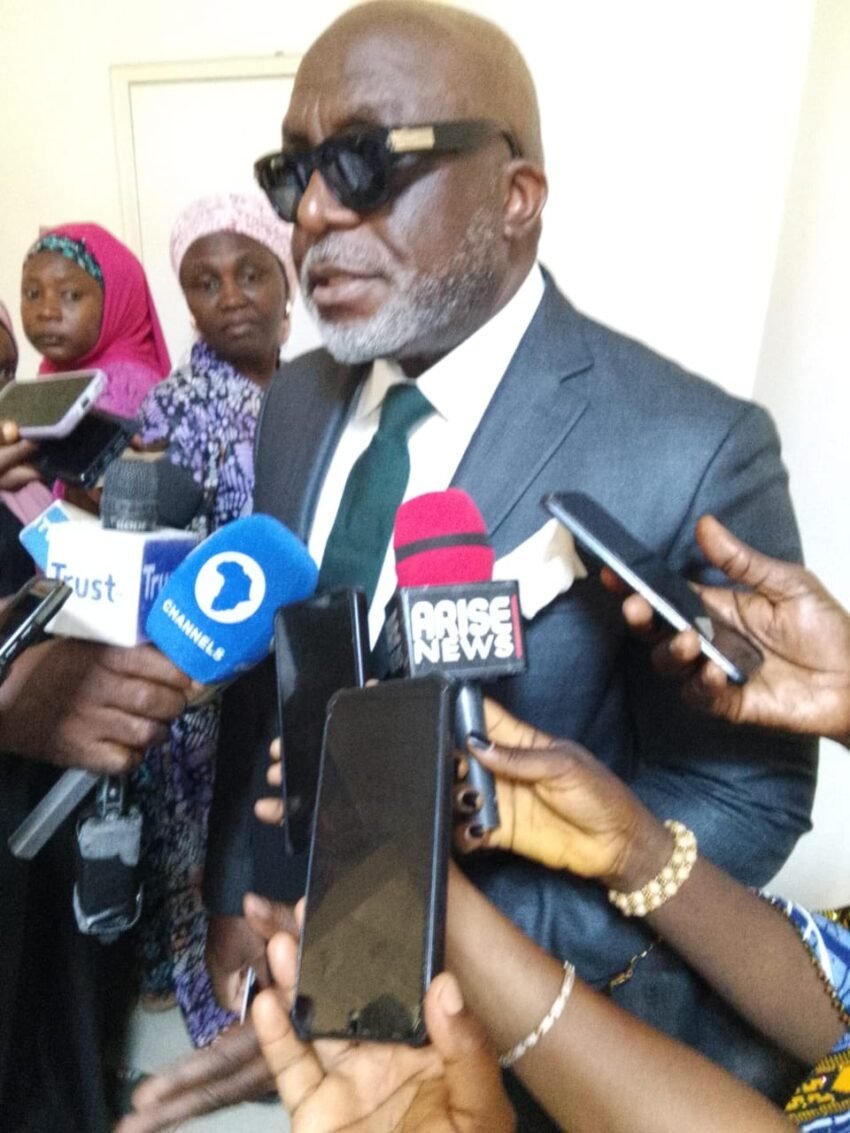
Executive Chairman of United Nigeria Airlines, Professor Obiora Okonkwo, gave the charge at the 18th Founder’s Day celebration of the American University of Nigeria (AUN), Yola, on Saturday, stressing that the success of a tertiary institution should be measured by the capabilities it builds in students rather than the certificates it awards.
Delivering the 2026 Founder’s Day lecture titled “Purposeful Education and the 21st-Century University: Leadership, Innovation and Social Responsibility,” Okonkwo argued that a university degree should be regarded as a starting point for lifelong learning and not an automatic guarantee of professional competence.
He maintained that education should be a transformative process that equips graduates with the knowledge and practical skills to address societal challenges.
According to him, academic qualifications alone cannot guarantee an individual’s ability to identify problems, communicate solutions, collaborate effectively, learn independently or exercise sound judgment in uncertain situations.
“Students must come to understand that education is not about getting certificates. What you earn from this school should not only be enough for you to succeed as an individual, but should also be useful to society,” he said.
Okonkwo urged universities to produce well-rounded graduates and responsible citizens capable of contributing meaningfully to national development and economic growth.
He also encouraged students to become employers and job creators rather than relying solely on the search for paid employment.
“The measure of your education will not ultimately be determined by the prestige of your certificates or the positions you occupy, but by the value you create, the problems you solve, the opportunities you generate and the lives you improve,” he added.
Commenting on AUN’s international outlook, the guest lecturer said the institution should translate its global academic standards into practical solutions for the challenges facing northeastern Nigeria.
He cautioned against separating international excellence from local relevance, noting that global recognition would mean little without meaningful contributions to the immediate society.
Okonkwo also commended the university’s academic practices and expressed satisfaction with its achievements despite prevailing perceptions about its location.
He pledged to support the institution by sponsoring some students on scholarship in the coming academic year.
The airline executive further praised AUN’s founder and former Vice President, Atiku Abubakar, describing him as a visionary leader and outstanding institution builder whose contribution to education went beyond establishing a university.
Earlier, Atiku Abubakar, in his Founder’s Day address delivered by former Rivers State Governor, Rotimi Amaechi, identified human capital development, technological innovation and artificial intelligence as critical priorities Nigeria must embrace to remain competitive in the global economy.
In his address titled “The Future We Choose: Human Capital, Artificial Intelligence, and Nigeria’s Renewal,” the former Vice President described Nigeria’s people, particularly its youthful population, as the country’s greatest national resource.
He maintained that the nation’s future would depend largely on its ability to educate, equip, employ and empower citizens to compete in an increasingly technology-driven world.
Atiku argued that Nigeria’s development challenge was not necessarily a shortage of talent but the inability to consistently develop and deploy the enormous human potential available to the country.
He called for the development of homegrown technological solutions to address local challenges, identifying agriculture, education, public healthcare, electricity, access to clean water and small-business development as sectors with significant opportunities for technological innovation.
According to him, the quality of Nigeria’s human capital, rather than the abundance of its natural resources, would ultimately determine its economic competitiveness and national prosperity.