

By Mustapha Salisu
The ChildSphere Development Initiative has trained 60 street-connected children in Sauna community of Nasarawa LGA, Kano State, in various vocational skills as part of efforts to provide alternatives to street begging and hawking.
The Founder and Executive Director of the organisation, Muhammad Usman, disclosed this during the close-out and skills exhibition of the Children’s Learning and Empowerment Project implemented in the community.
Usman said the project which was supported by Luena Foundation and was implemented in two phases over the past year, focused on equipping vulnerable children with non-formal vocational skills to enable them become self-reliant and reduce their dependence on street begging and hawking.
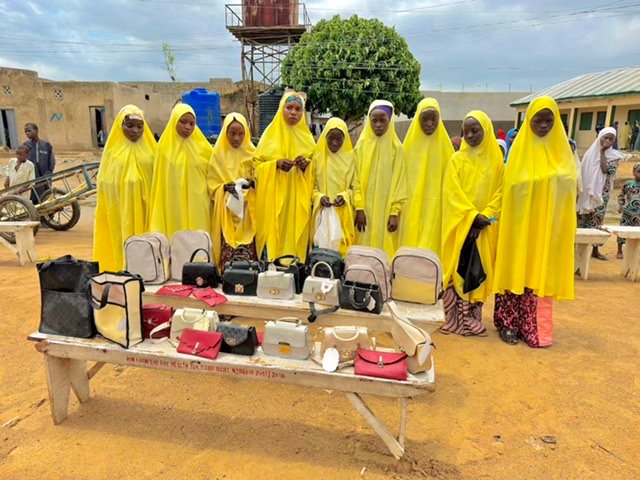
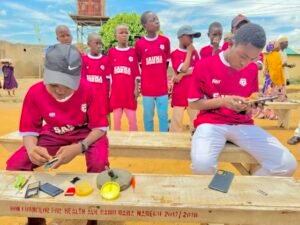
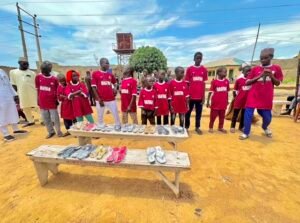
He said the beneficiaries, comprising 30 females and 30 males, were trained in GSM repair, tailoring, bag making and shoemaking, adding that the exhibition provided an opportunity for the children to showcase the products and skills acquired during the three-month training.
Usman urged the beneficiaries to continue practising and developing the skills acquired, saying the provision of toolkits at the end of the second phase would give them the resources needed to sustain their learning and turn their skills into livelihoods.

He also called on government, civil society organisations and development partners working on similar issues to collaborate on a joint action plan that would provide sustainable alternatives and a brighter future for street-connected children.
Usman equally urged the Sauna community to take ownership of the initiative and sustain the gains recorded under the project, stressing that continued community involvement would be critical to its long-term success.
Speaking on the motivation behind the initiative, the Project Director, Umar Usman Khalil, said a research conducted three years ago indicated that Kano State had between 800,000 and 900,000 out-of-school children.
Khalil said the findings, coupled with ChildSphere’s child protection mission, prompted the organisation to initiate the programme to address the challenges facing vulnerable and street-connected children.
He explained that Sauna community was selected following research which identified it as one of the communities with a high number of out-of-school and street-connected children in the state, as well as concerns over persistent thuggery and drug abuse in the area.
Also speaking, Head of the Planning Committee in the community, Muhammad Danjuma, said community members played a central role in the planning and implementation of the project to promote ownership and ensure sustainability beyond the project period.
He explained that community members and other stakeholders were engaged throughout the programming process, noting that their knowledge of the challenges affecting the community was critical to designing appropriate interventions.
Danjuma further said ChildSphere trained community members to identify and mobilise local assets and resources to develop sustainable solutions through its Community Co-Creation Lab, which he described as an approach aimed at enabling communities to solve their problems using locally driven solutions.
Beneficiaries who spoke on behalf of their colleagues, including Sadiya Ibrahim and Usman Sabiu, expressed appreciation to ChildSphere Development Initiative and community leaders for supporting them with the vocational skills training.
They pledged to judiciously utilise the skills acquired to become self-reliant and eventually create employment opportunities for others in their community.
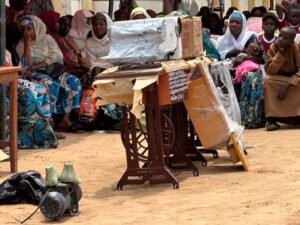
Highlights of the event included the distribution of vocational tools, including sewing machines and other equipment, to participants to enable them practise and sustain the skills acquired during the training.
The event also featured the presentation of certificates to the beneficiaries and cash prizes to winners in various categories in recognition of their outstanding performance.