

Choice Of Kano Deputy Governor: Long Overdue
By Adamu Aminu
Kano often presents itself as a leader in political sophistication, educational advancement, and institutional awareness. Yet the prolonged delay in selecting a deputy governor raises questions that go beyond routine politics.
The drawn-out process, with no end in sight, recalls the Hausa saying, “Wankin hula zai kaimu dare” — means a dithering that leads us into nightfall.
The back-and-forth sits uneasily with Kano’s long-standing reputation for administrative clarity and political maturity. At a time when expectations are high, the pace of decision-making appears misaligned with the state’s own standards.
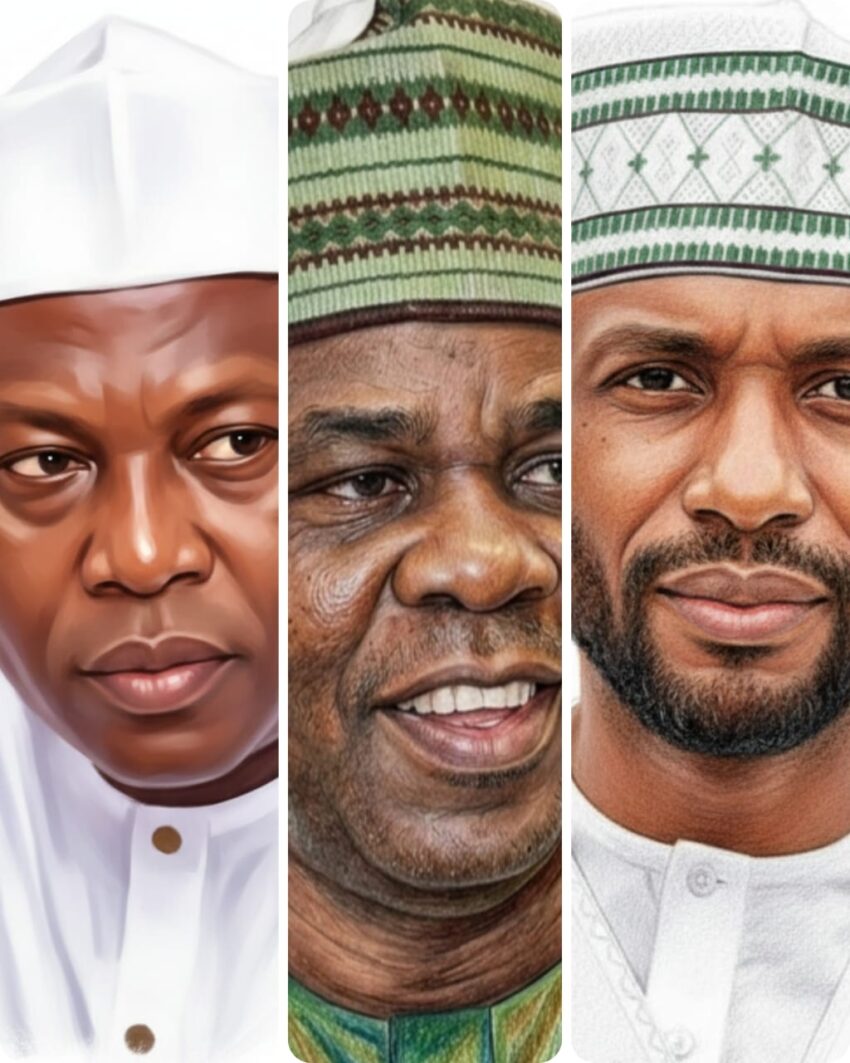
The issue is not a lack of qualified candidates. The three nominees — Hon. Kabiru Alhassan Rurum, Murtala Sule Garo, and Rabiu Suleiman Bichi — each bring distinct experience and institutional exposure.
Their records span legislative service, executive administration, and grassroots governance. By most objective measures, the field offers sufficient depth for a timely and credible decision.
The concern lies in the process, not the options. A prolonged selection timeline creates avoidable uncertainty within government and invites speculation about competing interests shaping the outcome.
While consultation is necessary in democratic governance, it should be structured, time-bound, and guided by clear institutional benchmarks.
From a policy standpoint, the deputy governor’s office is integral to continuity and coordination.
It is not designed to remain in limbo.
The Delays in filling the position risk weakening administrative process and may complicate internal alignment within the executive arm. Even where day-to-day governance continues, the absence of closure on a key constitutional office sends an unintended signal about decision-making efficiency.
There is also a broader implication for public confidence. In a state that prides itself on intellectual and political heritage, expectations of orderly governance are higher. When processes appear drawn out without clear explanation, it creates a perception gap between stated ideals and operational reality. Managing that perception requires not only a final decision but also clarity on how the process is being conducted.
Ultimately, the task before the APC leadership is straightforward: conclude the selection in a manner that balances consultation with decisiveness, and political accommodation with concrete responsibility.
Credibility, expertise, and institutional integrity must weigh more than the naive belief that a loose purse or spree giving is part of the benchmark for choosing the next second-in-command.
Those whom the party — the APC — entrusted with selecting a credible nominee should remain aware that Kano State is now under close scrutiny.
The external political observers are watching through a critical lens. The choice will confirm the present political maturity or otherwise of Kano State, the pyramid city of Mallam Aminu Kano.
The credibility of the process will rest not just on who is chosen, but on whether the choice reflects timely, transparent, and accountable governance.
The deputy governor’s post is an institutional office in its own right, contrary to the widely held but wrong assumption that the position is merely a “spare tyre seat of governance”
It is hoped that the new deputy governor will be credible and institutionally prepared to complement Governor Abba’s efforts to institute a forward-looking framework for Kano’s development.
Adamu Aminu writes from Kano