

By Mustapha Salisu
Stakeholders have called for the deliberate integration of gender and climate justice principles into Nigeria’s digital transformation agenda to ensure a fair, inclusive, and environmentally responsible digital future.
This was one of the major outcomes of a webinar organized by the Centre for Information Technology and Development (CITAD) under its ongoing project titled “Greening and Feminist Centering of the National Digital Transformation Agenda.”
The session, themed “Digital Skills, Green Jobs, and Gender Equity: Aligning Nigeria’s Policies for a Just Transition,” was held on October 29, 2025, with support from the Association for Progressive Communications (APC).
Participants drawn from civil society, academia, the private sector, and youth-led organizations agreed that Nigeria’s digital economy must evolve in a way that promotes environmental sustainability, gender equity, and social inclusion.
They emphasized that the digital revolution should not widen existing inequalities but instead empower women, young people, and marginalized communities to take part in shaping the nation’s technological and green future.
Following the engagement, stakeholders highlighted the need to close the gender gap in access to technology, leadership, and decision-making. They stressed that digital transformation and environmental responsibility must go hand in hand to build a resilient and just society.
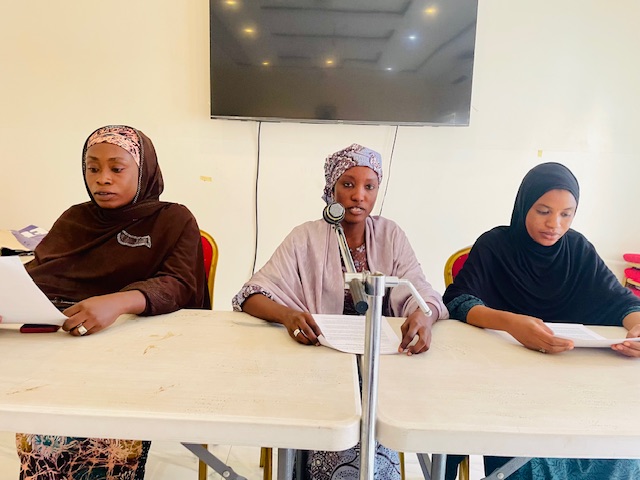
At a press briefing held at the Bjorn Beckman Hall in Kano, the Project Lead, Fatima Babakura, reaffirmed CITAD’s commitment to championing these ideals.
She noted that Nigeria’s digital and green transition offers vast potential for innovation and job creation but warned that the process must also address the challenges of climate change, environmental degradation, and social inequality.
“Digital literacy is no longer an added advantage; it is a necessity for inclusion in today’s economy. For Nigeria to achieve a just transition, women and young people must be supported through capacity building, mentorship, and access to digital tools that enable meaningful participation in the digital space” Babakura said.
She added that CITAD is urging the Federal Government to integrate gender and climate justice into the National Digital Economy Policy and Strategy (2020–2030) and other related frameworks. As well as appealing to development partners and private sector actors to invest in digital and green skills development, particularly for women and youth in underserved and rural communities.
Babakura further called for gender-responsive budgeting and stronger institutional collaboration to bridge policy gaps and promote inclusive innovation.
“Technology must serve people, protect the planet, and uphold the principles of equity and justice,” Babakura emphasized.
She also appealed to the media and advocacy networks to continue amplifying awareness around the intersection of gender, technology, and climate justice, in order to sustain national momentum for an inclusive digital transformation.
Reiterating CITAD’s vision, Babakura said the Greening and Feminist Centering Project reaffirms its dedication to building a digital ecosystem that is fair, inclusive, and environmentally sustainable, ensuring that no one especially women and marginalized groups is left behind in Nigeria’s digital future.