

By Dr. Musa Abdullahi Sufi
For decades, Kannywood has stood as one of Africa’s most vibrant cultural institutions, entertaining millions, preserving the Hausa language, promoting social values, and serving as a powerful platform for public education. Through their films, actors, actresses, producers, directors, and scriptwriters have inspired generations and helped shape conversations on health, education, family values, peace, and community development.
Yet behind the bright lights, celebrity status, and public admiration lies a less visible reality.
Many of Kannywood’s stars and industry veterans have quietly endured difficult battles with illness, disability, and financial hardship. Some spent years entertaining society only to find themselves struggling to access quality healthcare when they needed it most. For many families, a serious illness meant not only pain and uncertainty but also devastating financial consequences.
Today, however, a new chapter is unfolding—one built on compassion, inclusion, and innovative leadership.
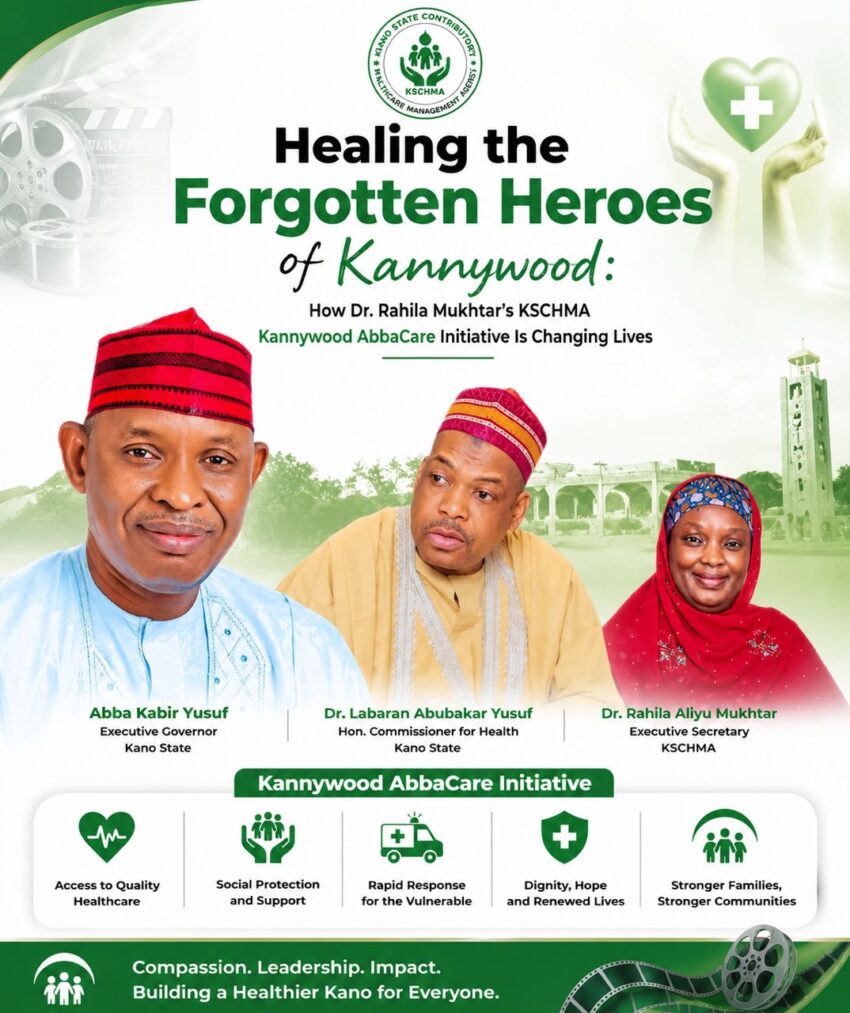
The launch of the Kannywood AbbaCare Initiative by the Kano State Contributory Healthcare Management Agency (KSCHMA) represents far more than a healthcare intervention. It is a bold statement that every life matters and that those who have spent their lives enriching society deserve protection, dignity, and access to quality healthcare.
Spearheaded under the visionary leadership of Governor Abba Kabir Yusuf’s Kano First Healthcare Development Agenda, the initiative seeks to ensure that vulnerable Kannywood practitioners are not left behind in Kano State’s journey toward universal healthcare coverage.
At the heart of this transformation is Dr. Rahila Aliyu Mukhtar, Executive Secretary of KSCHMA, whose commitment to healthcare inclusion has introduced a people-centered approach to social protection. Her leadership reflects a growing recognition that healthcare is not merely a service but a fundamental human right that should be accessible to all, regardless of social or economic circumstances.
Working closely with the Commissioner for Health, Dr. Labaran Abubakar Yusuf, Dr. Rahila has helped strengthen a healthcare system that prioritizes compassion, accessibility, and responsiveness. Together, they are demonstrating how public institutions can move beyond policy statements to deliver meaningful change in the lives of ordinary citizens.
What makes the Kannywood AbbaCare Initiative particularly remarkable is that its impact became visible almost immediately after its launch.
One of the early beneficiaries is renowned Kannywood actress Zainab Diamond, who has been battling a serious health condition requiring specialized medical attention and treatment. Following the launch of the initiative, urgent steps were taken on the directive of Dr. Rahila Mukhtar to facilitate her admission into a healthcare facility and ensure that she receives the necessary medical care and support under the programme.
This swift intervention transformed the initiative from a policy announcement into a living example of compassionate governance in action.
For Zainab Diamond and countless others who may benefit in the future, the programme represents more than access to treatment. It represents hope. It represents the reassurance that society has not forgotten them. It represents the possibility of recovery, renewed strength, and a return to productive living.
For their families, it means relief from the emotional and financial burden that often accompanies prolonged illness. For the industry, it means preserving the talents, creativity, and experience of individuals who have contributed immensely to cultural development and public enlightenment.
The significance of this initiative extends far beyond Kannywood.
Creative industries are often celebrated for their economic and cultural contributions, yet the welfare of the individuals behind that success is frequently overlooked. The Kannywood AbbaCare Initiative challenges that reality by recognizing artists not only as entertainers but also as valuable citizens deserving of social protection and healthcare security.
Globally, discussions around Universal Health Coverage emphasize the need to reach underserved and vulnerable populations. Kano State’s approach provides a practical and inspiring example of how governments can transform those ideals into measurable action. Rather than waiting for vulnerable individuals to fall deeper into crisis, the initiative proactively identifies needs and delivers timely interventions.
More importantly, it highlights a timeless truth about leadership: the true measure of governance is not found solely in infrastructure projects or policy documents but in the positive difference made in people’s lives.
When a sick actress receives urgent care, when a struggling family regains hope, and when vulnerable citizens are protected from catastrophic healthcare expenses, governance becomes tangible. It becomes personal. It becomes transformative.
As Kano State continues to expand innovative healthcare programmes, the Kannywood AbbaCare Initiative stands as a powerful example of what can happen when compassion meets leadership and policy is translated into action.
The initiative is restoring dignity to those who once suffered in silence. It is strengthening public confidence in healthcare systems. It is protecting vulnerable families. Most importantly, it is reminding society that behind every celebrated actor, actress, producer, or filmmaker is a human being whose health and well-being matter.
In a world where many creative talents continue to struggle quietly with illness and financial hardship, Kano State is offering an important lesson in inclusive governance. Through the leadership of Governor Abba Kabir Yusuf, the commitment of Commissioner for Health Dr. Labaran Abubakar Yusuf, and the innovative vision of Dr. Rahila Aliyu Mukhtar and KSCHMA, healthcare is becoming more than a service, it is becoming a vehicle for hope, dignity, social justice, and lasting change.
The healing of Kannywood has begun, and for many forgotten heroes of the industry, that healing is restoring not only health but also hope for a brighter future.