

By Alhaji Yusuf, Damaturu
The International Committee of the Red Cross (ICRC) has concluded a two-part training workshop for 50 Nigerian journalists aimed at strengthening media coverage of humanitarian crises and the plight of people affected by armed conflict and violence across the country.
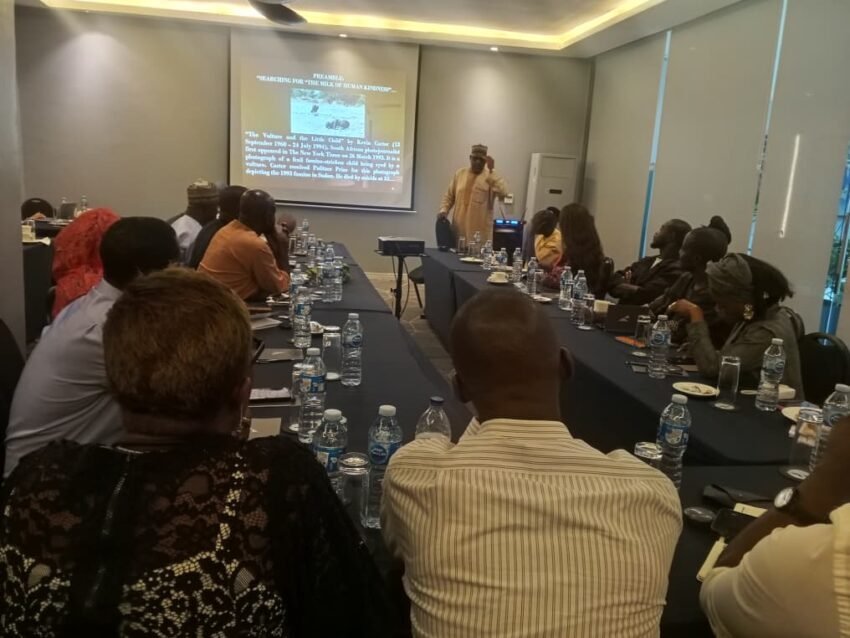
The workshop,held in Lagos, brought together reporters from the Northeast, North-Central, and Southwest regions. The first batch of 25 participants completed their session on Tuesday, while the second group of 25 concluded on Friday
Speaking at the close of the training,Usman Kundili, Communications Officer with the ICRC Abuja delegation, explained that the initiative was designed to equip journalists with the skills and context needed to report on Nigeria’s complex humanitarian realities.
“It’s vital, knowing the issues we face today Nigeria’s humanitarian conditions in various regions. Laboring and interacting with the media, especially journalists throughout Nigeria, is vitally important, as only the media possesses the ability to amplify the voices of the unheard, notably individuals impacted by strife, ensuring they remain central to conversations.
“These humanitarian crises and the aftermath of armed conflict and violence can be readily overlooked during times of other narratives of major upheaval.
“That is why it’s vital for journalists to grasp the seriousness and harshness of the humanitarian condition and those impacted by it and, crucially, to share the accounts of communities and people,”Kundili said.
He added that some of the most dire consequences of armed conflict are currently unfolding in Nigeria, making the training especially timely.
Usman Kundili disclosed that the ICRC has documented roughly 24,000 individuals reported missing by their families over the years. However, a review of the organization’s database revealed that it has lost contact with approximately 7,000 families who initially registered missing relatives.
“Given our knowledge of ongoing abuse and deception tactics, and because even those registered with us are vulnerable, we’ve lost touch with roughly 7,000 families, which adds to our active cases in Nigeria totaling 17,000,” he said.
“The ICRC has since conducted radio outreach on stations in Northeast Nigeria, visited families, and collaborated with local leaders to reconnect with those who reported missing relatives.
“These 17,000 are those our field teams actively pursue for families, as we still sustain links with kin of those who filed,” Kundili explained.
He described family separation as one of the most serious outcomes of conflict, particularly in Northeast Nigeria, though the problem extends to other parts of the country as well.
On why Lagos was chosen for the workshop, Kundili said the city’s status as Nigeria’s media center made it an ideal gathering point for journalists from across the country.
“We aimed to draw journalists from all regions to Lagos, where they might also connect and meet other press.In prior years, the ICRC has functioned well and worked alongside reporters to broaden these aid narratives emerging from the North and Northwest regions, to stress the seriousness of these concerns and support impacted people.
“This particular course has involved 50 reporters.Twenty-five more reporters nationwide Northeast, Northwest, Midlebelt and Southwest regions gathered to broadly display current aid crises impacting Nigeria. Crucially, beyond statistics, these represent persons enduring daily hardship and pain,”said Kundili.
The training is part of the ICRC’s effort to strengthen partnerships with Nigerian media and ensure that the voices of conflict-affected communities remain central to national conversations.