

By Abbas Ibrahim
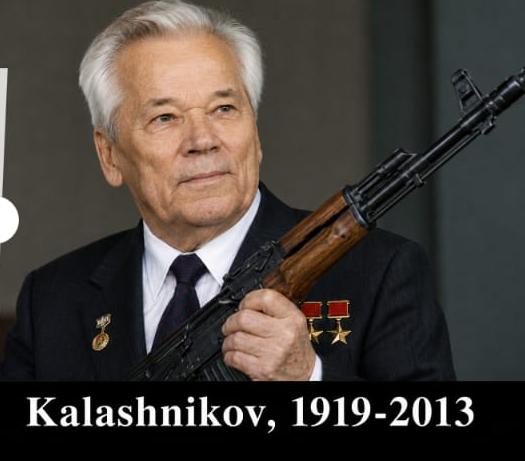
At the age of 27, Mikhail Kalashnikov invented what later became one of the most recognized assault rifles in modern history, the AK-47. As a Russian soldier and engineer, Kalashnikov designed the weapon during the Second World War primarily to defend the then Soviet Union against invading forces. His intention, according to historical accounts, was national defence, not global destruction.
What made the AK-47 stand out was its simplicity, durability and adaptability. The rifle could function under harsh weather conditions, was easy to operate, simple to maintain and effective even in difficult terrains. These features made it attractive not only to national armies, but also to armed groups across the world. Over the decades, different countries and manufacturers modified and adapted the technology to suit their own military and security interests, making the rifle one of the most widely circulated weapons globally.
Today, nearly eight decades after its invention, the AK-47 and its variants remain common weapons in conflicts around the world. Disturbingly, bandits, terrorists, insurgents and criminal gangs across parts of Africa and beyond continue to use the rifle to unleash violence, destroy communities and take innocent lives.
Yet, despite being celebrated globally as the inventor of the famous rifle, Kalashnikov reportedly expressed deep regret about the human consequences associated with his invention shortly before his death in 2013 at the age of 94. He reportedly wished he had created a machine for agriculture and food production rather than a weapon linked to bloodshed and destruction across generations.
That reflection offers a powerful lesson for societies everywhere, especially Nigeria.
Political violence perpetrated largely by youths hiding under the banner of political activities has continued to cast a dark shadow over the history, stability and reputation of many states in Nigeria. In some states, what once appeared as ordinary political rivalry has dangerously transformed into organized thuggery, intimidation, theft, destruction and attacks on innocent citizens struggling to survive through lawful businesses.
One of the greatest tragedies of Nigeria’s politics is the systematic exploitation of poor and unemployed youths by unpatriotic politicians who see them merely as tools for political battles. During elections and political confrontations, vulnerable young people are recruited, armed, manipulated and pushed into violence, often with promises of money, protection or political rewards that rarely materialize.
Ironically, many of the same politicians sponsoring violence would never allow their own children to participate in such dangerous activities. Their sons and daughters are sent abroad to study in prestigious universities and build successful futures, while children of the poor are abandoned to the streets.
This hypocrisy must be confronted honestly.
Democracy is not war. Politics should never become a recruitment ground for criminality. Elections are supposed to be guided by persuasion, ideas, dialogue and convincing rhetoric, not chaos, fear and bloodshed. A political system that continuously breeds violent youths ultimately creates long term insecurity for society itself.
The dangers of breeding political thugs are enormous.
A young person introduced to violence for political purposes today can easily become tomorrow’s armed robber, kidnapper, cultist, drug trafficker or extremist. Violence rarely ends with elections. Once weapons, criminal networks and lawlessness become normalized, society itself loses control. Communities become unsafe, businesses suffer, investors stay away and economic growth declines.
More dangerously, political thuggery destroys the moral foundation of society. It teaches young people that violence is a shortcut to relevance, income and recognition. It weakens respect for law, encourages impunity and gradually erodes public trust in democracy itself.
Nigeria cannot continue on this path.
The line must be drawn against the continued use of youths as instruments of violence.
Religious leaders, traditional institutions, parents, civil society organizations, media practitioners and responsible political actors must collectively reject the normalization of political thuggery. Politicians who sponsor violence should be publicly condemned, isolated and held accountable under the law.
At the same time, government must go beyond condemnation and address the root causes driving youths into violence, especially poverty, unemployment, drug abuse and illiteracy among others.
A civilized and sustainable alternative is urgently needed. With the burden on government,
States across Nigeria should consider establishing transparent crowd funded security and youth development trust funds insulated from political interference. The model should involve respected members of the private sector, civil society, professional bodies, religious leaders and community representatives to ensure transparency and public trust. This should be proceeded by aggressive awareness creation.
Such funds can focus on,
Supporting community security initiatives,
Rehabilitating and empowering youths already damaged by political violence,
Providing vocational training, education grants and entrepreneurship support,
Expanding mental health and drug rehabilitation services,
Creating sports, innovation and civic engagement programmes.
Strengthening intelligence gathering and early conflict prevention mechanisms.
When citizens trust that funds are transparently managed and directly improving security and youth development, public participation and support will naturally increase.
Nigeria’s youths should be seen as assets for national development, not weapons for political survival. Nigeria deserve politics driven by ideas, competence, development and responsible leadership, not violence and manipulation. The future of the country cannot be built on the exploitation of poor youths while privileged children of the elite enjoy safety and opportunities elsewhere.
If Kalashnikov could regret creating the AK-47, Nigeria must not wait until generations are destroyed before regretting the dangerous culture of political violence we are nurturing today.