

By Abba Dukawa
Judicial politicization in Nigeria refers to the consequences that arise when the judiciary is perceived as being influenced by political interests instead of acting independently and impartially.
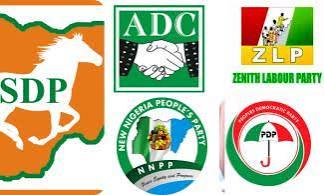
In Nigeria, concerns about judicial independence often surface in election petitions, party leadership disputes, and constitutional cases involving major political parties.
The long-term strength of democracy depends on public confidence that courts apply the law fairly to both ruling and opposition parties. Yet political actors often interpret the same ruling differently, based on whether it advances or undermines their interests.
Democracy rarely collapses overnight. It erodes gradually when opposition voices are marginalized, institutions yield to political pressure, and citizens lose faith in the system. Nigeria’s judiciary must not allow that erosion to take hold.
As the guardian of justice and an impartial custodian of democracy, the judiciary is expected to uphold the rule of law without fear or favour. However, recent developments have raised concerns that the institution may be allowing itself to be influenced by powerful political actors. A judiciary perceived as compromised risks eroding public trust, weakening democratic institutions, and undermining the principles on which the nation was founded.
At critical moments, courts must remain firm, independent, and committed to justice. The future of democratic governance depends not only on credible elections, but also on strong institutions willing and able to protect citizens’ rights and uphold the Constitution.
Perceived partiality and selective rulings weaken democratic competition. A healthy democracy requires all parties to compete on relatively equal terms. When court decisions appear to favour ruling parties or influential actors, opposition parties are placed at a disadvantage in candidate selection, campaign activities, and post-election litigation. Such perceptions undermine confidence in the fairness of the democratic process and erode trust in institutions.
Furthermore, contradictory rulings that seem to favour the ruling party can discourage political participation. Politicians and citizens may conclude that legal and electoral outcomes are predetermined, reducing their willingness to engage in politics or support opposition movements.
The judiciary is also expected to check executive and legislative power. When it is seen as politicized, public confidence in its ability to hold officials accountable declines, weakening constitutional governance and the rule of law.
Moreover, perceptions of biased judgments damage the judiciary’s reputation and credibility. Concerns about independence can affect how international observers, investors, and organizations assess a country’s democratic institutions and legal system. This diminishes confidence in Nigeria’s commitment to fairness, transparency, and democratic principles.
Ultimately, the legitimacy of any democracy rests on the independence and integrity of its institutions. A judiciary trusted to act impartially strengthens democratic governance, protects constitutional order, and ensures that all political actors—whether in government or opposition—are treated equally before the law.
A recent court ruling in a party dispute risks further eroding public trust in the judiciary, which is essential for the rule of law. When citizens believe judges act for political reasons rather than impartially, confidence in the courts, elections, and democratic institutions declines.
Opposition supporters who view court decisions as politically motivated may grow increasingly distrustful of formal institutions. That loss of trust fuels political polarization, weakens democratic legitimacy, and heightens tensions between parties.
Dukawa writes from Kano and can be reached at abbahydukawa@gmail.com