

By Mariya Shuaibu Suleiman
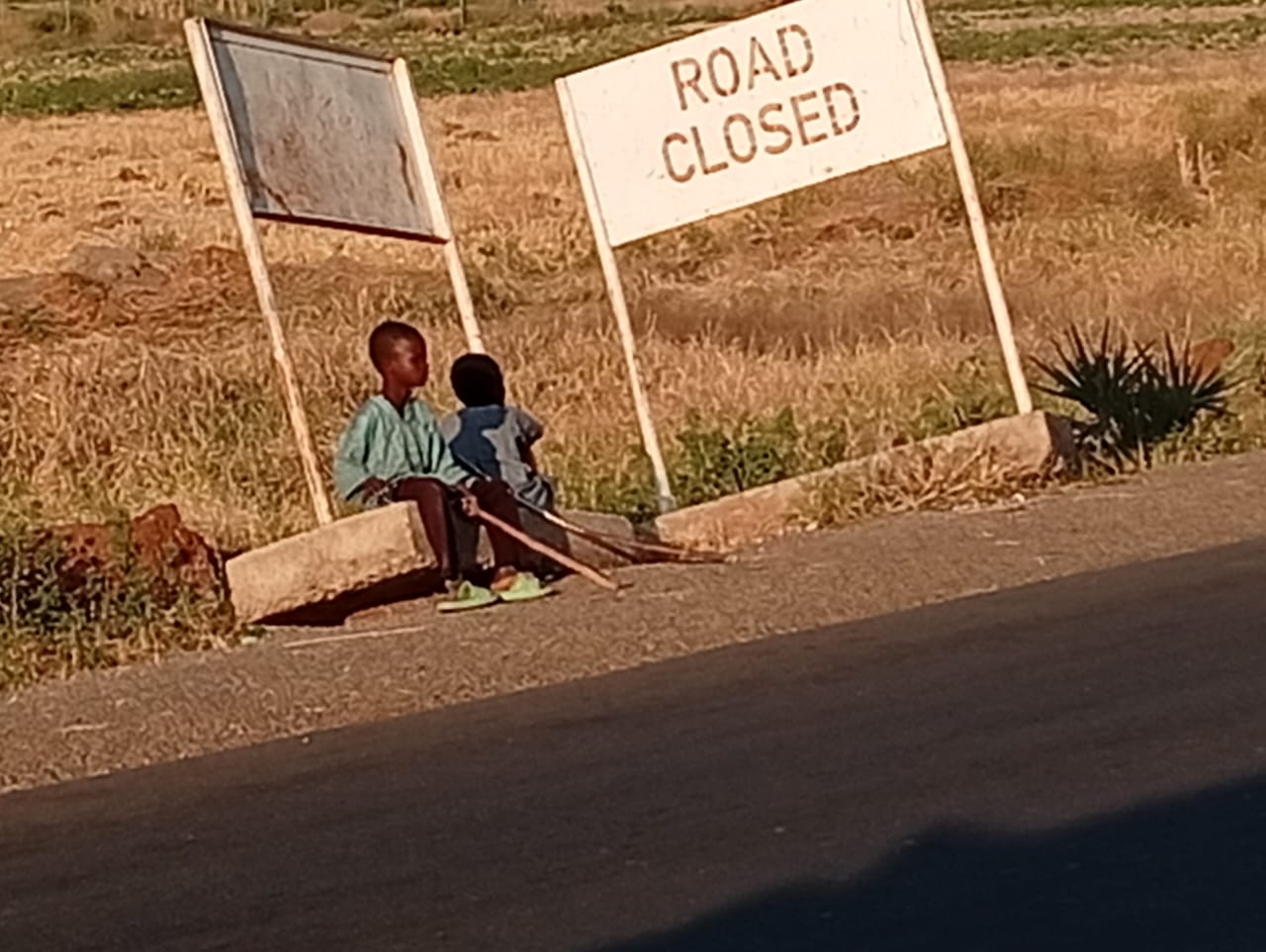
Abubakar remembers the night everything changed. The corridor where he slept was quiet, the kind of silence only street children learn to trust. Then a hand tapped him awake.
“I was sleeping under a corridor when somebody touched me,” he recalls. “They didn’t tell me anything. They just said I should follow.”
Before he understood what was happening, he was in the back of a van with dozens of other boys barefoot, half-awake, confused. At the temporary camp where they were taken, he slept on a thin mattress in a crowded hall where mats lined the floor from wall to wall.
“We prayed when they said we should pray, we ate when they said we should eat,” he says. “Nobody says anything.”
Abubakar’s voice is a composite—shaped with psychologists to protect the identities of vulnerable children—yet it mirrors the fear and disorientation many felt after being swept into one of Kano State’s most ambitious child-rescue operations in years. Launched with fanfare and framed as a protective measure, the programme is now suspended. And the children it targeted remain stuck between narratives of rescue, rights, and responsibility.
Kano, the commercial centre of northwest Nigeria, has long been the heart of the almajiri and street children crisis—boys sent by their parents to study the Qur’an under a Malam, often far from home and without food or support. Estimates of almajiri boys in the state range from 300,000 to more than 600,000. UNICEF places Kano’s out-of-school population at roughly 989,000, mostly boys, the same children who fill informal Qur’anic schools and sleep on roadsides.
It was against this backdrop that the State Governor, Abba Kabir Yusuf authorised a sweeping Hisbah-led operation in early 2025. The Hisbah Board announced that any child found sleeping under bridges, near gutters, or in uncompleted buildings would be taken to the Hajj Camp—medically screened, fed, and given both Islamic and formal education.
“We have decided to keep them at the Hajj Camp and give them proper education,” the Deputy Commander-General of Hisbah, Dr Mujahid Aminuddeen Abubakar, said. Some, he promised, could be supported “up to tertiary level.”
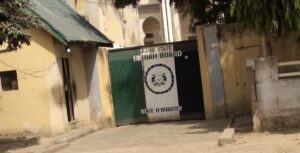
Hisbah—Kano’s Islamic moral-policing agency, established in 2003, typically mediates family disputes, curbs public immorality, and helps lost persons. It does not run complex child-protection systems. Still, it was placed at the centre of an operation involving the National Human Rights Commission (NHRC), NAPTIP, and several state ministries. In one major sweep, more than 200 children were taken into custody.
Abdullahi Shehu, Kano State Coordinator of the NHRC, insists the camp was inspected and found satisfactory.
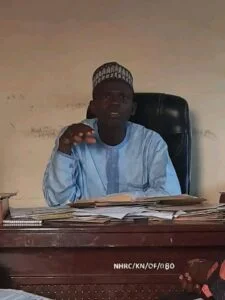
“They were given mattresses and blankets, fed three times a day, and screened by health personnel,” he says. “Children with contagious diseases were quarantined and treated.”
To him, their rights were not only protected—but improved.
“Compared to sleeping by the roadside or hotels in the middle of the night, their pattern of life was better.”
Between 1 a.m. and 4 a.m., Hisbah officers combed the city.
“Imagine—a child of seven or ten years sleeping near hotels,” Mr Shehu says. “Even commercial sex workers were helping to point out where the children were sleeping.”
More than 200 children were taken in the first operation.
“To us, their rights have been realised, not violated.”
But outside the gates of the camp, fear spread among other almajirai.
Abbas Yusuf, a fifteen years old almajiri living in the street of the Kano metropolis, began avoiding Hisbah patrol routes.
“I don’t want to be taken there because I don’t know them and I don’t want to be caged,” he says.
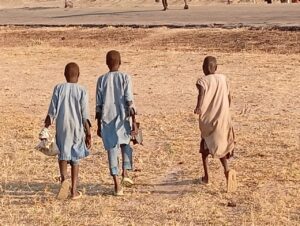
Abbas has simple dreams—daily food, freedom, and the chance to go to school.
“My message to the governor is to sponsor us to good schools, give us food and clothes,” he pleads softly.
Talking about if this initiative is legal according to the law, the NHRC argues that the rescue was lawful. Under the Constitution, the Child Rights Act 2003, and Kano’s Child Protection Law, a child found in danger can be removed without parental consent if it is in the child’s best interest.
But even as the legality was defended, cracks in the operation had already begun to widen.
An Operation Heavy on Hope, Light on Planning.
Inside Hisbah, not everyone shared the confidence projected publicly. Yusuf Abdullahi, a frontline officer involved in raids across Sabon Gari, says the assignment felt more like a humanitarian emergency than a rescue mission.
“When you see them sleeping near gutters, roadside, under the bridge, you will sympathise,” he says quietly.
Children were taken straight to Hajj Camp, where teachers, cooks, and health workers were deployed. But the Ministry of Women Affairs, Children and People with Special Needs—legally responsible for child welfare, soon raised alarm.
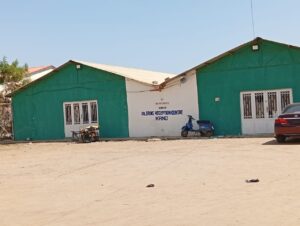
“Hisbah cannot handle child-protection issues the way they handle other matters,” says senior ministry official, Yakubu Muhammad Salihu.
When the ministry visited the camp, they found no structured system in place.
“We had to start our own documentation,” he explains. “Names, ages, health details, and family information.”
Their assessment uncovered deeper vulnerabilities: untreated illnesses, HIV infections, and children with no traceable families.
“Children on the streets are vulnerable to a lot of dangers,” Mr Salihu says. “You cannot address this without proper planning, services, family reunion and integration.”
Sustainability also became a crisis almost immediately.
More than 200 children needed food, healthcare, clothing, teachers, sanitation, and security—every day.
From surveys, Shehu estimates that more than 5,000 children roam the streets of Kano.
“Starting with 250 was just a tip of the iceberg.”
But the real shock came when documentation began: nearly 70 percent of the rescued children were not from Kano State. Some came from Katsina, Bauchi, Maiduguri, Jigawa; others from outside Nigeria: Niger, Chad, and Cameroon. A few had no traceable families.
The governor wanted rapid repatriation; the ministry refused.
“No child should be returned without proper case management, psychosocial support, and verified reintegration plans,” Mr. Salihu says.
Money also quickly dried up. Only the federal government briefly supported feeding. A few NGOs helped repatriate foreign children.
“No other state government came to aid the process,” Mr Shehu adds.
He sighs deeply. “Planning to host more than 5,000 children is a big task,” he says. “The government stopped the process to develop a clear strategy and budget before continuing.”
Even Hisbah officials admit the truth.
“I can see the program has not achieved its desired goal,” one says, voice heavy. “The number of children coming into the state is too many. Plans have not been put in place.”
The Hajj Camp, despite the promises, was never built for this scale.
Between the months of July and August, Hisbah quietly halted its night-time raids. The children already collected were moved to another camp.
The Vanishing Children
Weeks later, when I visited the Hajj Camp, the children were gone.
The building was locked. The hallways silent. Residents said they had not seen the boys “for a while.”
The government made no announcement.
An official whispered after hesitating: “They have been moved to Mariri Camp. Quietly. No disclosure.”
To confirm, I travelled to Mariri Camp in Kumbotso LGA. Officers allowed me into the compound, but not into the boys’ rooms.
“You cannot enter,” one of the officers said softly, closing the door behind him.
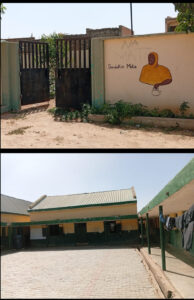
Inside the courtyard, a faint sound rose through the heat—the melodic hum of children reciting the Qur’an. Their voices drifted through walls like waves.
I could not see them. But they were unmistakably there.
Hidden from the public. Relocated without announcement and kept out of view.
Today, 231 children remain at Mariri—waiting for documentation, family tracing, reunification, or decisions delayed too long.
Communities Divided, Questions Rising
Community reactions remain split. Usman Garba, a parent, recalls the panic when a neighbour’s child went missing—only to be found at Hajj Camp days later.
“The child used to be very rude,” he says. “But when we saw him there, he was calmer.”
He believes the government owes families clarity even though parents are to be blamed for exposing their own children outside and not taking care of them.
“If there are programmes like this, they should be announced,” he says. “The public needs to know.”
To him, what the children need more is education and pleads with the government to empower them by enrolling them in schools .
Civil society groups have been more critical.
Resource Centre for Human Rights and Civic Education (CHRICED) warns that forced round-ups and repatriations often violate children’s rights.
“In most cases, they are forcefully arrested, transported, and dumped like unwanted items,” says Senior Programme Officer, Omoniyi Adewoye.
Lawyers say the Child Rights Act demands due process:
- Section 11 prohibits degrading treatment
- Section 6 protects liberty
- Sections 8, 9, 14, 15 guarantee parental care, protection from neglect, and access to education
“Taking children without investigation or adequate care risks violating their rights,” says Becky Izioma Dike, an attorney at the Nigeria International Federation of Women Lawyers (FIDA).
Psychologists warn of emotional damage.
Dr. Sadiya Lawal Danyaro, a psychologist at the Federal University Dutsin-Ma says forced pickups and sudden relocation can trigger fear, nightmares, insecurity, and mistrust in authority.
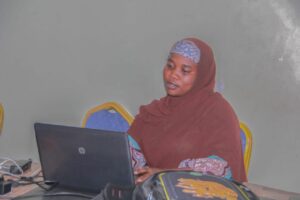
“Instead of seeing the system as protective, they see it as controlling,” she says. “Sustainable rehabilitation must be child-centred and built on dignity.”
A Future On Hold
The suspension of the Hisbah-led programme exposes a deeper struggle within Nigeria’s child-protection system: balancing urgent rescue with legal safeguards, psychological care and sustainability.
While Hisbah and the NHRC defend the intervention.The Ministry of Women Affairs insists it was incomplete. CHRICED argues rescue cannot replace investment in schools, social protection, and regulated Qur’anic learning.
Meanwhile, in Mariri Camp, about 231 children wait.
They eat together. They sleep in shared rooms. They wait for news that may not come soon.
Some recite, some write and some stare into space.
Most simply wait for families, for answers, for a future that feels distant.
For Abubakar—the boy shaken awake under a corridor, the uncertainty remains.
“I just want an intervention that truly helps us, not one that takes us away and leaves us with nothing,” he says quietly. “If the government says it wants to protect children, then it should give us real shelter, real food, real education — not promises that end in suffering.”
Their silent plea echoes through the compound. A childhood paused, suspended somewhere between the streets of Kano and the walls of Mariri Camp. Waiting for a system that sees them. Waiting for a government that does not lose them again. Waiting for the childhood they were promised—but never received.
As the sun begins to set over Mariri Camp and the last echoes of Qur’anic recitation fade, psychologist Dr. Sadiya Lawal Danyaro offers a sobering reminder of what is truly at stake.
“Rehabilitation is not just about removing a child from danger,” she says softly. “It is about giving them stability, dignity, and continuity. When you take children suddenly, move them abruptly, and then leave their future uncertain, you create a new wound while trying to heal an old one.”
She pauses, choosing her words with the weight they deserve.
“When structure disappears overnight, the child feels confused, insecure, and sometimes abandoned. Forced pickups alone can be traumatic. And when support collapses, children begin to fear the very system that claims to protect them,” she added.
For her, the lesson is clear. “Sustainable rehabilitation must be child-centred and built on dignity, support, and continuity of care,” she concludes. “Anything less leaves children more vulnerable than where they were found.”
THIS STORY WAS PRODUCED WITH THE SUPPORT OF MEDIA MONITORING AFRICA AS PART OF THE ISU ELIHLE AWARDS.
NB: THE NAMES OF CHILDREN USED ARE NOT THEIR REAL NAMES (TO PROTECT THEIR IDENTITIES).