
By Mustapha Salisu
The Kano State Government and European Union (EU) have strengthened development discussions aimed at expanding cooperation in education, agriculture, healthcare, infrastructure, and climate resilience, as both sides explore new pathways for sustainable growth and investment in the state.
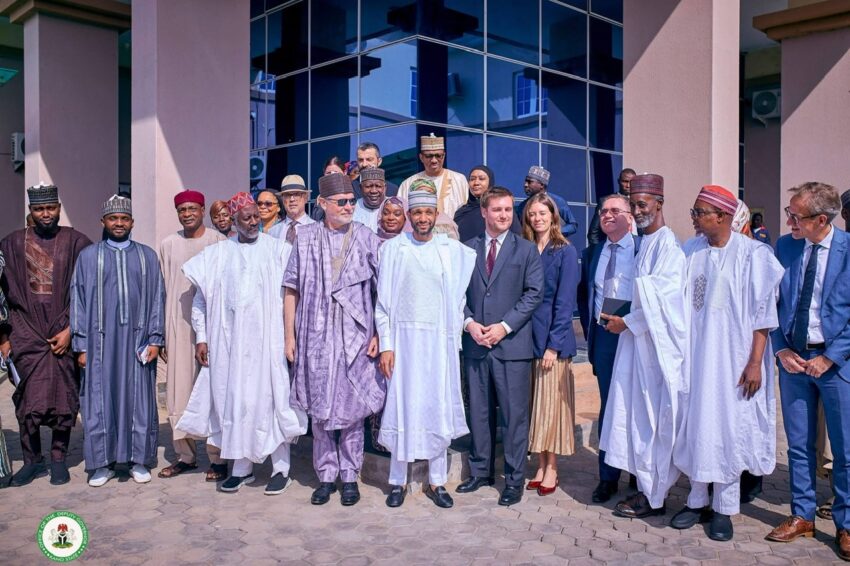
The engagement took place on Monday during the presentation of “Kano State’s Urban Development Strategy” to ambassadors and representatives of EU member states, with Deputy Governor, Alhaji Murtala Sule Garo, representing Governor Abba Kabir Yusuf.
Garo described Kano as a historic commercial hub experiencing rapid urban growth, stressing that deeper international partnerships are necessary to manage development pressures while unlocking economic opportunities for its growing population.
He called on the European Union to increase support for education and skills development through investments in school infrastructure, teacher training, vocational education, and digital learning systems. He also advocated expanded scholarship and exchange programmes to enhance human capital development.
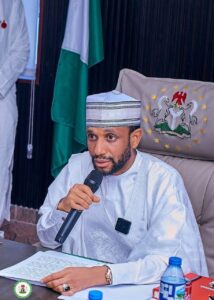
Photo Credit: SARAKEE NG
On economic empowerment, the Deputy Governor urged collaboration in supporting small and medium-sized enterprises (SMEs), entrepreneurship programmes, and innovation hubs aimed at creating sustainable jobs for young people.
He further requested technical assistance in reviewing Kano’s draft Public-Private Partnership (PPP) policy to ensure it aligns with best practices and the state’s development priorities.
In agriculture, Garo appealed for support in modern farming techniques, irrigation systems, livestock development, and value-chain expansion, noting that climate-smart agricultural practices would improve food security and resilience.
He also highlighted the need for stronger healthcare systems, particularly in maternal and child health services, disease prevention, and improved access to essential medical care.
Environmental sustainability featured prominently in his remarks, with calls for cooperation on desertification control, renewable energy, climate adaptation, and sustainable infrastructure development.
Garo expressed optimism that stronger EU-Kano cooperation would promote shared prosperity, economic stability, and long-term development, while positioning the state as a key investment destination in Northern Nigeria.
Speaking earlier, EU Ambassador to Nigeria, Gautier Mignot, explained that the delegation, comprising ambassadors and representatives from eight EU member states, chose Kano for its annual mission due to its strategic role as a major development hub in Northern Nigeria and the wider Sahel region.
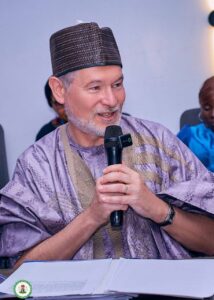
Photo Credit: SARAKEE NG
He reaffirmed the EU’s strong economic ties with Nigeria, noting that the bloc remains the country’s largest trading partner and a leading destination for non-oil exports.
According to him, EU member states account for about one-third of foreign direct investment in Nigeria, alongside development programmes focused on job creation, youth empowerment, women’s inclusion, infrastructure development, and sustainable economic growth.