
By Mustapha Salisu
The Kasham Community Development Initiative has raised concerns over the dangers of lead exposure from paints, warning that prolonged exposure could cause serious health complications, particularly among pregnant women, infants and young children.
The organisation called for stronger regulatory enforcement, public awareness and collective action to eliminate lead-containing paints from Nigerian markets.
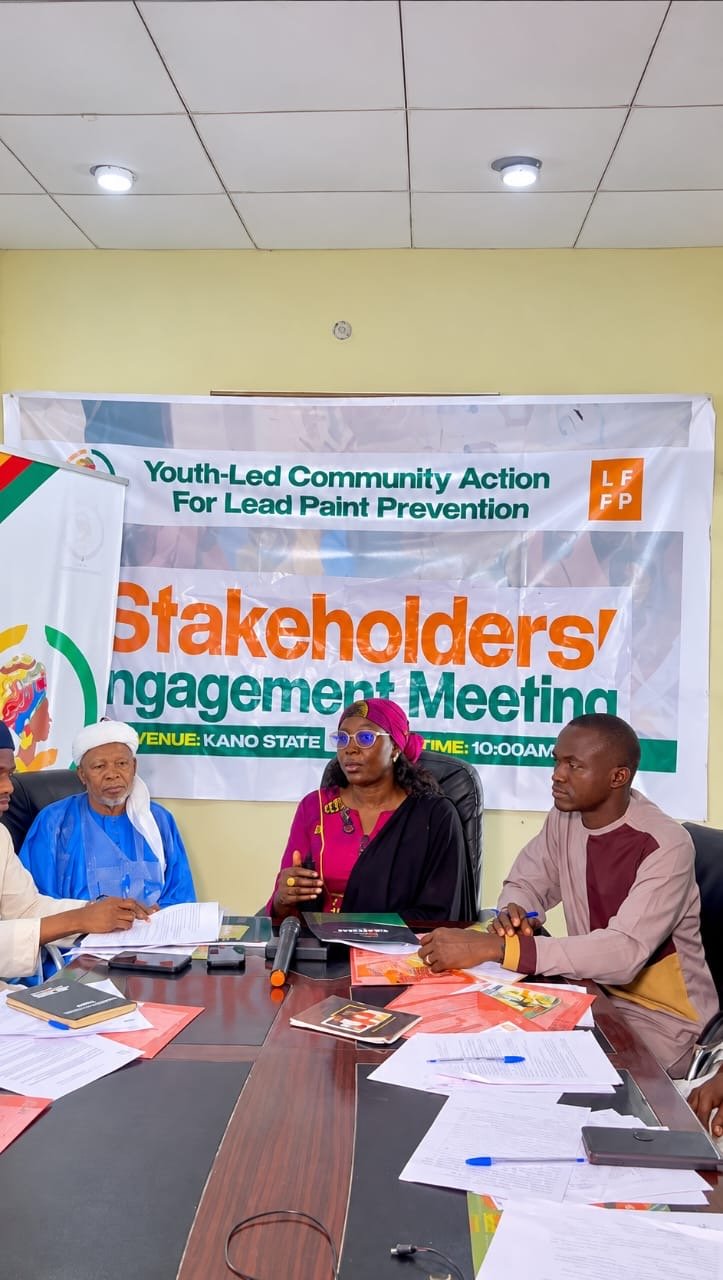
The Executive Director of the Initiative, Dr Dinatu Dama Maji, made the call on Monday at the Kasham Office in Kano during a press briefing on its Lead Paint Awareness Project, themed “Protecting Lives Through Collective Action Against Lead in Paints.”
The project, sponsored by the Local Action Fund, focuses on raising awareness and mobilising stakeholders to protect vulnerable populations from the dangers of lead exposure.
Dr Maji explained that lead is a toxic heavy metal that can cause serious and sometimes irreversible health problems, noting that exposure often occurs without people knowing because the substance cannot be seen, smelled or tasted.
She identified certain paints, contaminated soil, household dust and water, used lead-acid batteries, mining activities and some traditional consumer products as possible sources of lead exposure.
According to her, deteriorating lead-containing paints can release contaminated dust and particles into the environment, which children may accidentally swallow or inhale through their daily activities.
She warned that lead exposure during pregnancy is particularly dangerous, as lead stored in a woman’s bones can enter the bloodstream during pregnancy and cross the placenta, thereby exposing the developing baby.
The Executive Director noted that exposure could affect brain and nervous system development, increase the risk of pregnancy complications, cause learning difficulties, lower intelligence quotient, behavioural problems, hearing impairment and kidney damage.
She stressed that children are particularly vulnerable because their brains and nervous systems are still developing, adding that there is no known safe level of lead exposure.
Dr Maji, however, emphasised that lead poisoning is preventable if appropriate safety measures, regulatory controls and public education are strengthened.
She recalled that the Federal Ministry of Health and Social Welfare had developed the National Policy and Action Plan on Lead Poisoning Elimination in 2024, while Nigeria maintains a permissible lead limit of 90 parts per million in paints under the applicable Nigerian Industrial Standard.
She said the existence of policies and standards must be supported by effective implementation, regular product testing, market surveillance and enforcement to ensure that paints sold in the country meet required safety standards.
The organisation consequently called on relevant federal and state institutions, particularly the Standards Organisation of Nigeria, environmental and health authorities, to intensify monitoring and ensure that non-compliant paint products are identified and removed from the market.
Dr Maji also urged paint manufacturers and importers to comply with national standards, while wholesalers and retailers were advised to patronise credible manufacturers, demand evidence of product compliance and avoid selling paints that do not meet safety requirements.
She further called on community and religious leaders to educate households on the dangers of lead exposure, while urging parents and caregivers to keep children away from peeling paints and renovation sites.
Healthcare professionals and civil society organisations were also encouraged to promote awareness, support early identification of exposure and advocate stronger environmental health protection.
The Executive Director emphasised the important role of the media in educating the public, challenging misinformation and sustaining conversations on the need for lead-safe environments.
She said the Lead Paint Awareness Project seeks to mobilise stakeholders towards protecting communities, particularly pregnant women, infants and children, from preventable exposure.
Dr Maji stressed that protecting public health should take precedence over commercial interests, urging paint dealers to make product safety a priority.
She added that the organisation’s message remained clear: a beautiful home should not come at the expense of a child’s health, calling for collective efforts to eliminate lead exposure from paints and build safer communities across Kano State and Nigeria.
Explaining earlier before the press briefing, why Kano State is a major focus of the intervention, Mr. Shedrach Elisha noted that the state’s rapidly growing population and increasing demand for infrastructure and building materials have heightened the need for stronger product safety monitoring.
He observed that rising demand in the construction sector could also create opportunities for substandard and potentially harmful products to enter the market, making public awareness, quality control and regulatory enforcement particularly important.
Speaking shortly after the press briefing, a representative of the Kano State Council of Ulama, Sheikh Ibrahim Abubakar Tofa, commended Kasham Community Development Initiative for its efforts and pledged the council’s support for the awareness campaign.
Tofa observed that religious leaders have a significant role to play in public enlightenment, noting that people often pay close attention to messages delivered by Islamic scholars from the pulpit.
He explained that the council regularly organises programmes through which scholars educate and admonish members of the public on righteous conduct and responsible living.
He assured Kasham of the council’s readiness to support the initiative, urging the organisation to reach out whenever it plans community awareness activities.
He further pledged that the council would provide representatives to accompany the organisation during its campaigns to help educate communities on the dangers of lead exposure and the importance of protecting public health.