

By Hajara Abdullahi
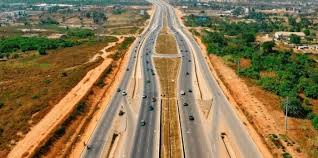
The Minister of Works, David Umahi, has revealed that the Lagos-Calabar Coastal Highway has begun attracting international investors, with at least four companies expressing interest in refunding the entire cost of Section One in exchange for operating and tolling the road.
Umahi made this known during a press briefing at the Ministry’s headquarters in Abuja on Wednesday.
“There are about four companies that have indicated interest to pay 100 per cent of what was spent on Section One of the coastal highway, take it over, and toll it. That process is ongoing,” Umahi said.
He added that only about 30 per cent of the Lagos-Calabar Coastal Highway is being funded by the Federal Government, while 70 per cent is being sourced from international financiers, stressing that the return on investment remains “very high.”
“When a nation is in crisis, you have to do everything possible to bring external funds into the system. That is the wisdom behind what the President is doing with these four legacy projects,” the Minister said.
Mr. Umahi described the project as a strategic economic corridor designed to link and unlock numerous infrastructural projects across the nation.
“This legacy project is an investment. It is linking all the ongoing projects of Mr. President,” he added.
He also dismissed allegations of irregularities in the procurement process made by a lawmaker, Senator Enyinnaya Abaribe, stating that the project underwent a comprehensive Environmental and Social Impact Assessment (ESIA) process, which is a prerequisite for attracting international funding.
According to him, the process involved stakeholder engagements across affected communities, public advertisements, independent assessments led by an academic expert, and an open international comment window before certification was issued.
“At the end of the day, a certificate of ESIA was issued. It was displayed publicly, and it remains on record,” he added.
The Lagos-Calabar Coastal Highway is one of President Bola Tinubu’s key infrastructural projects, designed to span about 700 kilometres along Nigeria’s coastline, linking Lagos, Ogun, Ondo, Delta, Bayelsa, Rivers, Akwa Ibom, and Cross River States.
Upon completion, the project is expected to boost trade, tourism, logistics, and coastal protection, while also serving as a strategic evacuation corridor for oil, gas, and agricultural assets in the southern belt.
However, concerns have been raised over its procurement, cost, and environmental implications.