

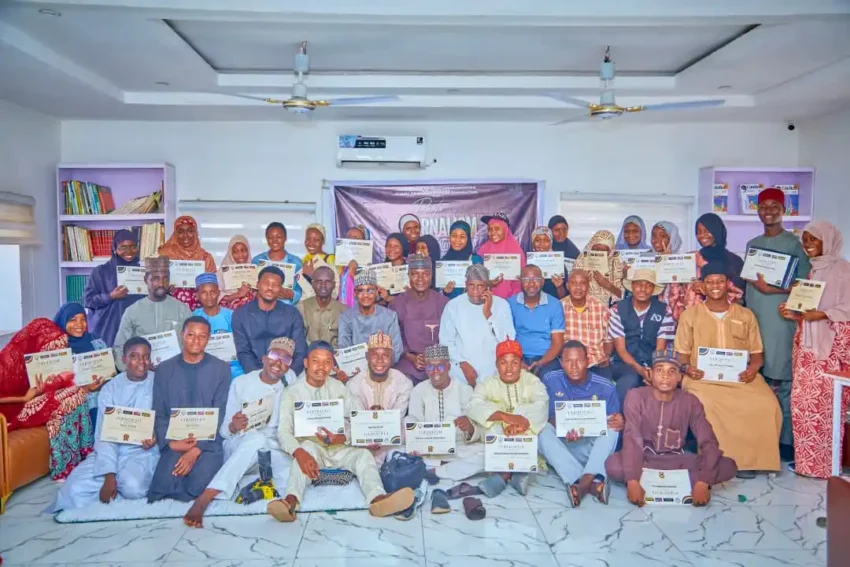
The Department of Mass Communication at Maryam Abacha American University of Nigeria (MAAUN), in collaboration with the Adamu Abubakar Gwarzo Foundation (AAG Foundation), has organised a photojournalism training workshop to equip students with practical photography and visual storytelling skills.
The training, held on August 18 at Alliance Française, Kano, was organised to commemorate the 2026 World Photography Day.
Themed “Capturing Reality: The Art and Impact of Photojournalism,” the workshop brought together professionals in photojournalism, documentary photography and visual arts to expose students to the creative, technical and documentary aspects of photography.
The programme was organised with the support of the Kano Visual Artists Association, led by its Chairman, Balarabe Uba Abdullahi.
Speaking during the workshop, a photojournalist and founder of Blue Lens Multimedia, Abdulwahab Said Ahmad, delivered a presentation titled “Beyond Camera: Photojournalism as a Tool for Social Change.”
He discussed the role of photography beyond documenting events, highlighting its capacity to raise public awareness and contribute to social change.
Also speaking, the Director of the AAG Foundation, Dr Musa Abdullahi Sufi, presented a paper on “Capturing Impact, Telling Stories: The Power of Photojournalism in Promoting Sustainable Development.”
Dr Sufi highlighted the role of compelling images in drawing attention to social issues and advancing conversations around sustainable development.
Balarabe Uba Abdullahi, on his part, took participants through architectural photography and documentary techniques, exposing them to methods of documenting buildings, landscapes, people and places while maintaining accuracy and visual appeal.
As part of the practical session, the students visited Dala Hills, one of Kano’s historic landmarks, where they received hands-on training on photography and different shot types.
The practical exercise exposed the participants to subject framing, capturing different perspectives, working with natural light and producing images suitable for journalistic and documentary purposes.
The visit also enabled the students to apply lessons from the workshop while documenting aspects of Kano’s historical and cultural heritage.
Certificates of participation were presented to the students at the end of the training in recognition of their completion of the workshop.