

From Tongnaan Bawa Jos
Plateau State Governor, Caleb Manasseh Mutfwang, has called for stronger political will, good governance and strategic communication to address Nigeria’s security challenges, warning that resource competition, ethnic militias and political manipulation continue to fuel violent conflicts across Africa.
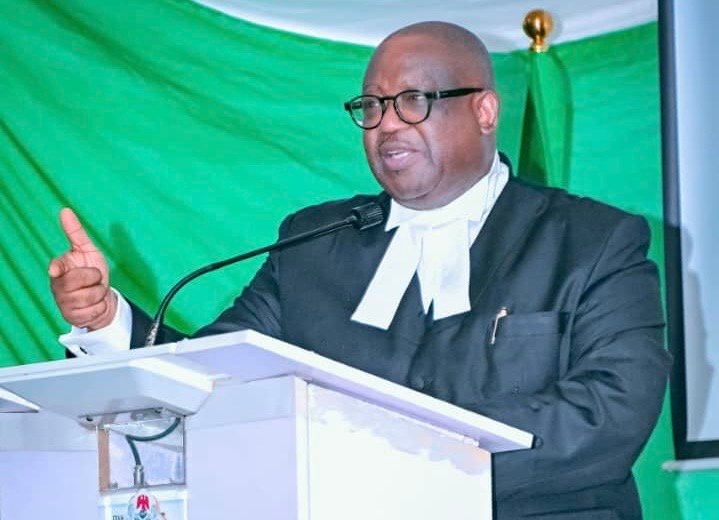
Mutfwang, according to his Director of Press and Public Affairs Dr. Gyang Bere Phd, made the call while delivering a lead paper at a crisis management seminar organised by the Directorate of Simulation and Crisis Management in collaboration with the National Institute for Security Studies (NISS) for participants of the Executive Intelligence Management Course 19 (EIMC 19), 2026, in Bwari, Abuja.
The seminar, held at the Rivers Learning Centre of NISS, was themed “Crisis Management Strategies for Addressing Ethnic Militias and Resource Competition in Africa: Implications for National Security.”
Drawing from Plateau State’s experience, the governor said insecurity must be addressed through a comprehensive understanding of local realities, warning against simplistic explanations of violent conflicts without investigating the actors, motives and circumstances behind individual attacks.
He challenged security practitioners and policymakers to critically examine attacks on sleeping communities and the displacement of indigenous populations from their ancestral lands, stressing the need for accurate intelligence and context-specific responses.
Mutfwang cited the March 2010 attack on Dogo Nahawa, also known as Dyemburuk, in which more than 500 people were reportedly killed, as well as the coordinated Christmas Eve attacks on communities in Bokkos Local Government Area in 2023, as painful reminders of the consequences of unchecked violence.
He identified competition for natural resources, population growth, migration, political manipulation of ethnic militias, struggles for territorial control and the proliferation of small arms as major drivers of insecurity.
According to him, these factors often interact with social, political and economic inequalities, deepening communal tensions and undermining peaceful coexistence.
To reverse the trend, the governor advocated inclusive governance, equitable resource distribution, stronger early-warning systems, dialogue and reconciliation, improved security operations and decisive action against the proliferation of illegal arms.
He also stressed the need to tackle poverty, unemployment and youth radicalisation, while strengthening inter-agency cooperation, institutional accountability and strategic communication to counter misinformation.
“Effective crisis management requires more than reactive security operations,” the governor maintained, emphasising that sustainable peace depends on addressing the root causes of conflict, building public trust and promoting inclusive development.
Mutfwang commended the Department of State Services (DSS), Plateau State Command, for intensifying intelligence gathering and maintaining professionalism in responding to the state’s security challenges.
He noted that timely intelligence, effective collaboration and responsible communication were critical to preventing attacks, protecting vulnerable communities and restoring public confidence in security institutions.
The governor called for a shift from reactive interventions to preventive measures capable of addressing the underlying causes of violence and establishing lasting peace.
In his response, the Commandant of NISS, Joseph O. Odama, commended Mutfwang’s presentation, expressing confidence that the insights shared would deepen participants’ understanding of Nigeria’s security challenges and strengthen their capacity to develop practical and sustainable crisis management strategies.