

Nigeria Must Read The Writing On Washington’s Wall
By Mohammed Abdullahi
American voters have delivered a message that should command attention far beyond Washington: when the cost of living becomes unbearable, political loyalty quickly gives way to economic survival.
The Republicans’ heavy losses to the Democrats in the midterm elections were not driven by one issue alone. Voters also expressed concern about President Donald Trump’s conduct, tariffs and the war with Iran. But the economy was at the heart of the revolt. Inflation, expensive fuel, rising utility bills and shrinking household budgets turned widespread frustration into electoral punishment. Two-thirds of voters said Trump’s policies had made the economy worse.
The lesson for Nigeria is difficult to miss. People may debate economic theories, fiscal targets and the long-term benefits of reform, but they experience government most directly through the price of food, transport and energy, and through whether they can sleep safely at night.
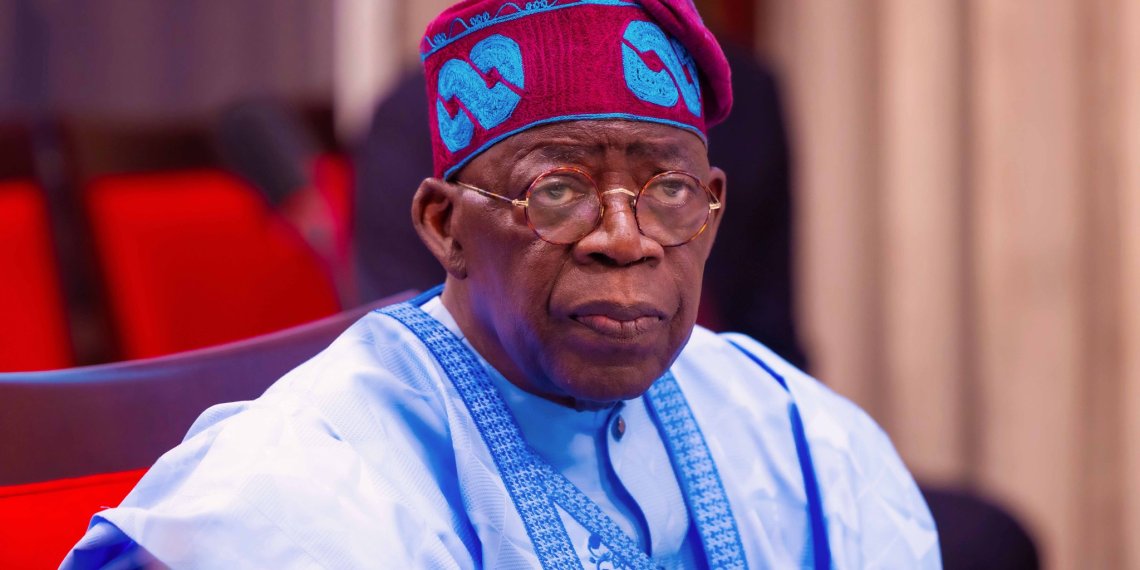
Since President Bola Tinubu announced the removal of the petrol subsidy in May 2023, Nigerians have endured repeated increases in pump prices. The policy may have been necessary to end an expensive and corruption-prone system, but the burden of implementation has fallen heavily on citizens. Petrol prices have climbed to record levels, transport fares have risen, businesses face higher operating costs, and salaries have lost much of their purchasing power.
For many workers, the monthly wage no longer lasts the month. Some Nigerians now leave their cars at home because they cannot afford to fill the tank. Others have turned private vehicles into commercial taxis to supplement their incomes. Small businesses must choose between buying fuel, paying workers and keeping their doors open. Parents are reducing meals, postponing school payments and cutting expenses that once counted as necessities rather than luxuries.
Food prices tell an equally troubling story. A country blessed with vast agricultural land is struggling to feed millions of its citizens affordably. Higher petrol prices raise the cost of transporting produce, operating irrigation pumps, processing grains and preserving food. At the same time, insecurity is driving farmers away from some of the country’s most productive agricultural communities.
Across parts of the North-West and North-Central zones, banditry, kidnapping and communal violence have turned farming into a potentially fatal occupation. In states such as Kaduna, Katsina, Niger, Sokoto and Zamfara, some farmers must either pay levies to armed groups, risk abduction or abandon their land. Similar pressures affect communities in Benue, Borno and Plateau. The result is predictable: fewer cultivated fields, disrupted supply routes, higher food prices and worsening hunger.
This is what makes Nigeria’s crisis more dangerous than a conventional inflationary cycle. It is a collision of economic hardship and physical insecurity. Fuel is expensive, food is unaffordable, farms are unsafe and household incomes are stagnant. In displaced and impoverished communities, children are pushed out of school and into street trading, begging or other forms of vulnerability. Insecurity is therefore not only taking lives; it is destroying livelihoods and weakening the country’s future.
The Tinubu administration argues, with some justification, that its reforms are correcting structural distortions accumulated over decades. No serious observer can deny that the old subsidy system was wasteful or that Nigeria’s dependence on imported petroleum products was indefensible. Reform, however, cannot be measured only by what it removes. It must also be judged by what it builds and whom it protects.
Citizens cannot be asked indefinitely to endure pain today in exchange for prosperity at an unspecified time tomorrow. Macroeconomic indicators may improve while families continue to go hungry. Foreign reserves may rise while commuters spend an ever-larger share of their wages getting to work. Investment announcements may sound encouraging, but they offer little comfort to farmers who cannot reach their fields or parents who can no longer afford basic food.
That is the warning from Washington. The Republicans discovered that economic statistics and political slogans cannot overrule the lived experience of voters. Once hardship enters the kitchen, empties the fuel tank and threatens the family budget, it becomes personal. Once it becomes personal, it becomes political.
For President Tinubu and the ruling All Progressives Congress, the approach of the 2027 election leaves little room for complacency. Incumbency is not an insurance policy against public anger. Party structures, elite endorsements and campaign machinery may influence elections, but they cannot permanently silence the verdict of millions of households under pressure.
The government must therefore move from explaining hardship to reducing it. It must secure farming communities and major transport routes, dismantle kidnapping networks, strengthen intelligence-led policing and ensure that displaced farmers can return home safely. It must also accelerate domestic refining, improve competition in fuel distribution and reduce the inefficiencies that keep petroleum products unnecessarily expensive in an oil-producing country.
Targeted support should protect vulnerable households without recreating the corruption of the old subsidy regime. Public transport must be improved. Agricultural production, storage and distribution require urgent investment. Most importantly, Nigerians need to see that the savings and revenue generated by reform are being used transparently to improve their lives, rather than to sustain the privileges of political officeholders.
The lesson for the electorate is just as important. Voting should not be treated as a ritual of ethnic loyalty, religious sentiment or short-term inducement. Nigerians must judge every party by measurable outcomes: Can families afford food? Are farms and highways safe? Are jobs being created? Are public funds being used responsibly? Is government listening when citizens say they are hurting?
America’s elections have shown again that voters retain the power to punish a governing party when promises collide with daily reality. Nigeria’s democracy will mature only when its citizens use the ballot with the same insistence on accountability.
Washington’s message is written clearly on the wall: when people are unsafe in their communities and impoverished in their homes, political power becomes fragile. The Tinubu administration can still change the story, but the clock is running. If fuel remains unaffordable, food remains beyond reach and farmers remain afraid to cultivate their land, Nigerian voters may eventually deliver a verdict no campaign slogan can reverse.
Mohammed Abdullahi,
writes from No. 12 River Close,
Kurmin Mashi, Kaduna.