

From Alhaji Yusuf, Damaturu
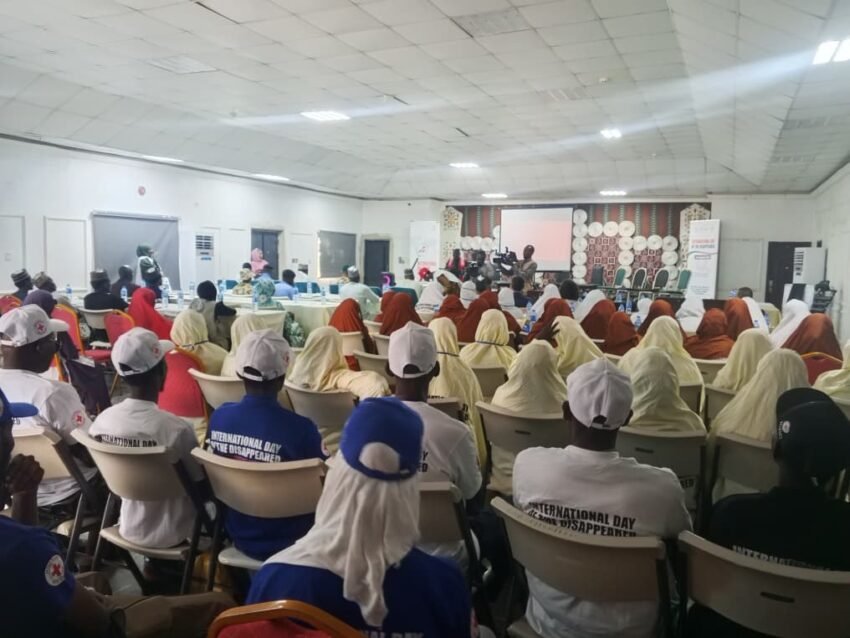
The International Committee of the Red Cross (ICRC), together with the National Red Cross Society and families of missing persons, commemorated the 2026 International Day of the Disappeared on Thursday under the theme “Every Missing Person Matters: Remembering, Supporting and Reconnecting Families.”
The event, held in Damaturu, brought together government agencies, community and religious leaders, and humanitarian organisations to honour missing individuals and renew commitments to supporting their families.
Speaking at the event, Mr. Syed Rashid Hassan, Head of the ICRC Sub-Delegation in Damaturu, revealed that the ICRC is currently following up on more than 17,000 cases of missing persons in Nigeria, with over 1,500 from Yobe State alone.
He noted that these figures likely represent only a fraction of the actual number across the country, and that more than half of those reported missing were children at the time of their disappearance.
According to him,globally, over 513,000 people were registered as missing with the Red Cross and Red Crescent Family Links Network by the end of 2025.
“The issue of missing people is one of the most devastating and long-lasting consequences of armed conflict, violence,disasters and migration.Across the world, hundreds of thousands are missing, leaving families shattered and searching for answers,”Hassan said
He emphasised that disappearance disrupts community fabric, hinders reconciliation, and impedes social and economic progress. Many families continue to live in agony, compounded by economic, legal, psychological, and administrative challenges.
Hassan outlined the ICRC’s comprehensive approach, which includes preventing family separation, reuniting families, properly managing the dead, addressing families’ multifaceted needs, and establishing systems to document unidentified bodies.
To address the psychological and social impact of disappearances, the ICRC launched an Accompaniment Program in Damaturu, which has so far supported over 50 families through counselling, peer support, and tree‑planting memorials.
Mr. Ali Idriss, Chairman of the Families of the Missing, spoke on behalf of affected families, expressing both pain and hope.
“For us, every missing person is a father, mother, son, daughter, or loved one. The uncertainty of not knowing is a burden we carry every day.We live between hope and uncertainty, asking: Where are they? Are they alive? Will we ever see them again?”,He added.
Idriss thanked the ICRC for its support through tracing, psychosocial sessions, and the tree‑planting initiative. He also thanked community leaders, particularly the Hakimi of Nayi-Nawa, for providing space for the programme.
He made a passionate appeal to government institutions to open their doors to families and address not only the search for the missing but also the emotional, economic, and legal needs of those left behind.
In a separate message to Imams and Pastors, the ICRC urged religious leaders to use Friday prayers and Sunday worship to disseminate key messages on preventing family separation, dignified management of the dead, and supporting families of the missing.
The ICRC noted that disappearance often occurs during displacement, communication breakdowns, injury, detention, or when a person dies unidentified.