

From Abdullahi Alhassan, Kaduna
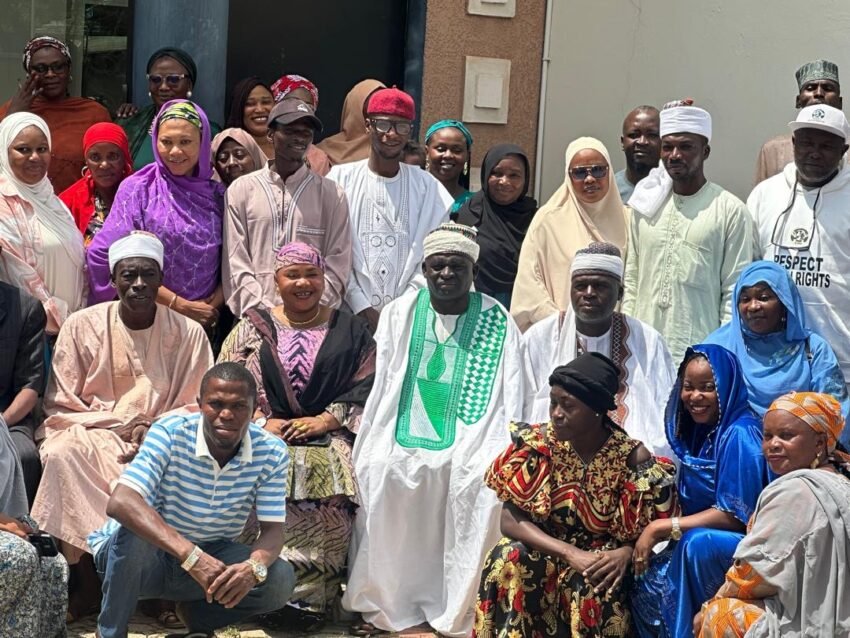
Sixty-five women and community leaders from across Kaduna State have been trained as community paralegal navigators to help residents access justice and prevent disputes from escalating into violence.
The two-day workshop supported by the German Embassy, Abuja brought together participants from the state’s three senatorial zones and focused on basic legal rights, early conflict intervention and appropriate referral of cases.
Speaking at the opening, Co-Executive Director of the Interfaith Mediation Centre, Samson Auta, said the training would equip participants with the knowledge and skills to guide victims of human rights violations through relevant legal and institutional processes.
He added that the partnership with the German Embassy in Abuja is focused on strengthening local capacity and improving protection for vulnerable members of society.
In many Kaduna communities, land disputes, family matters, resource conflicts and human rights violations often fester because people do not know where to go or cannot afford lawyers.
That gap, trainers told participants, is where community paralegals come in. They are not lawyers, but they can serve as a bridge between residents and the formal justice system by providing basic legal information, explaining rights and responsibilities, and referring cases to qualified professionals.
A Senior Magistrate in the Kaduna State Judiciary, Her Worship Maryam Abbas, explained that community paralegals serve as a bridge between residents and the formal justice system.
She urged participants to educate communities on fundamental rights, document complaints and refer cases to appropriate institutions when necessary.
Abbas warned the participants against presenting themselves as lawyers or representing people in court, stressing that complex cases should be referred to qualified legal and human rights institutions.
She also advised them to prioritise the safety of victims of sexual violence and ensure they are referred to appropriate health facilities and authorities.
One of the participants, Malama Khadijah Sa’ad of the Centre for Christian and Muslim Relations in Kaduna, said the training would help participants better understand their responsibilities and guide residents facing legal and human rights challenges.
Participants called for more programmes to strengthen women’s capacity to promote peaceful dispute resolution and improve access to justice in their communities.
The organisers said the initiative is expected to improve awareness of legal rights, strengthen early conflict identification and increase women’s participation in community peacebuilding.