
By Mustapha Salisu
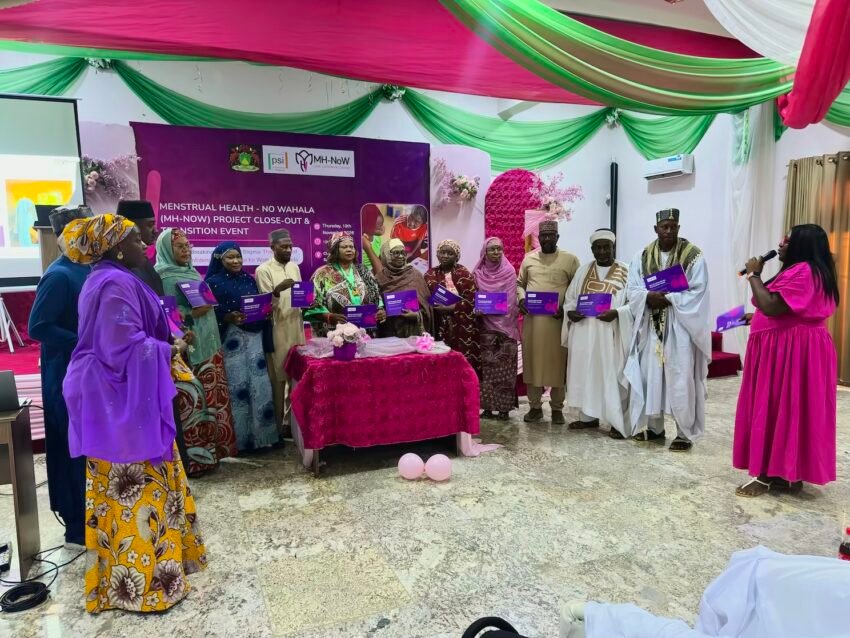
Population Services International (PSI) Nigeria has highlighted significant achievements recorded under its Menstrual Health – No Wahala (MH-NOW) Project in Kano State, following the close-out and transition of the programme on Thursday in Kano.
The project, which focused on breaking menstrual stigma and improving menstrual health among women and girls, was implemented in three local government areas: Nassarawa, Ghari and Garun Malam.
Speaking at the close-out and transition event themed “Breaking Menstrual Stigma: Three Years of Care, Confidence and Change for Women and Girls,” PSI State Programme Officer, Amina Sabia Musa, said the initiative recorded progress across three key performance areas.
She explained that the first focused on economic empowerment through the identification and support of indigenous sanitary pad producers, alongside distributors who make the products available and affordable within their communities.
According to her, the initiative also provided seed support to local producers to strengthen their businesses while addressing period poverty.
Musa said the second component focused on menstrual health, hygiene and knowledge through awareness campaigns across schools, communities and primary healthcare centres.
She added that the third component supported the development of what she described as Nigeria’s first-ever menstrual health policy.
The State Programme Officer called for sustained support from government, development partners and community stakeholders, stressing that menstrual health should not be treated as an issue affecting women alone.
“Menstruation is not a women’s issue; it is a human issue. We cannot work in isolation. We need the support of our men, husbands, fathers and brothers,” she appealed.
Amina said the organisation had spent the past two years raising awareness among women and girls on menstrual hygiene while promoting access to affordable sanitary products.
She appealed to government and other stakeholders to sustain the initiative, noting that open discussions about menstrual health were necessary to address misconceptions and encourage women and girls to seek appropriate healthcare.
Also speaking, Deputy Director and Head of Health Promotion at the Federal Ministry of Health and Social Welfare, Abuja, Madiu Ezeyoma, said the event provided an opportunity to assess the project’s achievements, listen to beneficiaries’ experiences and develop strategies for sustaining its impact beyond the implementation period.
She noted that the intervention had contributed to improved school attendance among girls, as increased awareness and acceptance had helped reduce the shame and stigma previously associated with menstruation.
Ezeyoma also highlighted the involvement of traditional leaders, community organisations and local champions in promoting menstrual health awareness.
She said the integration of menstrual health counselling into primary healthcare services had further strengthened the initiative, encouraging girls and women to seek appropriate information and support.
The Federal Ministry official urged parents and communities to encourage girls to maintain their education and daily activities during menstruation without fear or embarrassment.
In their separate testimonies, beneficiaries highlighted the positive changes recorded in their communities.
A service provider from Ghari, Samira Bello, said her involvement in the project had enabled her to educate women on the importance of discussing menstrual hygiene with their daughters.
Another beneficiary, Firdausi Bello, disclosed that PSI had supported five primary healthcare centres in Ghari, where awareness activities and counselling had encouraged young girls to communicate more openly with their parents about menstruation.
She said parents had also become more conscious of their children’s menstrual health, including keeping track of their menstrual cycles.
Firdausi pledged that beneficiaries and community stakeholders would continue promoting menstrual health awareness even after the project’s closure.
A major highlight of the event was the presentation of certificates and awards to outstanding project champions in recognition of their commitment, dedication and contributions to advancing menstrual health awareness and challenging stigma within their communities.