

By Mustapha Salisu
The Special Agro-Industrial Processing Zones (SAPZ) Programme in Kano State has expanded its community engagement and awareness campaign to cover eight additional catchment areas, as part of efforts to deepen farmer participation and strengthen value chain development.
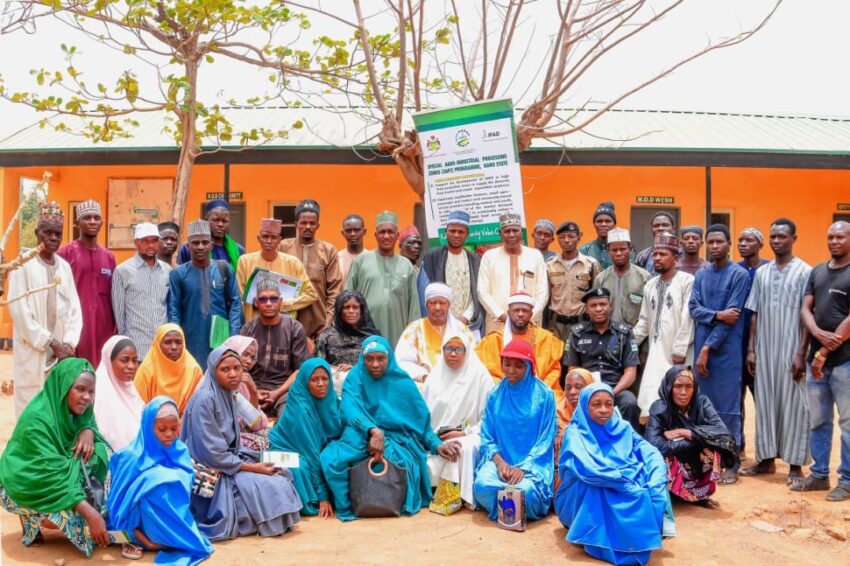
The Knowledge Management and Communication Officer of the Programme in Kano State, Hajiya Rabi Sadiq Mustapha, on Tuesday spearheaded the outreach across the newly captured communities.
The new catchment areas include Dawakin Kudu, Kumbotso, Tofa, Gwarzo, Madobi, Shanono, Minjibir, and Gabasawa Local Government Areas, bringing the total number of benefiting LGAs under the programme in Kano to 16.
According to her, this expansion is aimed at integrating more smallholder farmers, agro-processors, traders, and community-based service providers particularly women, youth, and persons with special needs into the SAPZ framework.
PRIME TIME NEWS gathered that SAPZ, a Federal Government initiative implemented in partnership with the Islamic Development Bank (IsDB), International Fund for Agricultural Development (IFAD) and African Development Bank (AfDB), is designed to drive agro-industrialisation by creating structured hubs that link farmers to markets, processing facilities, and private sector investment.
The participating states are Kano, Imo, Kaduna, Cross River, Kwara, Oyo and Ogun.
Under the Kano programme, the newly added LGAs are expected to benefit from increased awareness on priority value chains such as rice, tomato, sesame, and groundnut production, alongside access to market opportunities and capacity-building initiatives.
Hajiya Rabi further emphasised the importance of grassroots sensitisation in ensuring that farmers and stakeholders fully understand the opportunities embedded in the SAPZ initiative.
She added that the campaign seeks to mobilise stakeholders at the grassroots level, promote knowledge sharing, and encourage active participation in programme activities to ensure sustainability and improved productivity.
According to her, SAPZ has already profiled over 15,000 smallholder farmers across earlier catchment areas including Kura, Garun Mallam, Bebeji, Bichi, Bagwai, Gezawa, and Danbatta. Additionally, more than 12,000 farmers have received climate-smart agricultural inputs under the programme’s matching grant scheme.
“With the inclusion of the new catchment areas, SAPZ aims to further scale its impact by enhancing agricultural productivity, strengthening market linkages, and supporting rural economic growth across Kano State” she added.
The initiative is also structured to promote inclusive development, with women expected to make up 50 per cent of beneficiaries, while youth account for 40 per cent.
Haj. Rabi further emphasised the importance of forming farming groups comprising 10 to 25 members to harness economic benefits. She revealed that SAPZ facilitates off-take arrangements between producers and companies to ensure ready markets for agricultural produce.
She further disclosed that the programme has established a multi-stakeholder agribusiness forum as part of its sustainability and exit strategy, involving both public and private sector actors as well as research institutions.
Hajiya Rabi also raised concerns over issues of Malnutrition, disclosing that a targeted nutrition programme focusing on home gardening has been introduced.
She noted that women would be provided with toolkits to cultivate nutritious food for both household consumption and income generation, expressing optimism that the initiative would help address malnutrition in the communities.
Meanwhile, representatives of district heads in the three LGAs commended the SAPZ initiative and welcomed their inclusion as beneficiaries. They pledged continued support for the programme and urged participants to utilise the knowledge and opportunities provided effectively, while cascading the benefits to other members of their communities.
The programme’s catchment areas in Kano now include Bebeji, Bagwai, Kura, Gezawa, Garun Mallam, Bichi, Danbatta, Dawakin Kudu, Kumbotso, Tofa, Gwarzo, Madobi, Shanono, Minjibir, Dawakin Tofa and Gabasawa Local Government Areas.