

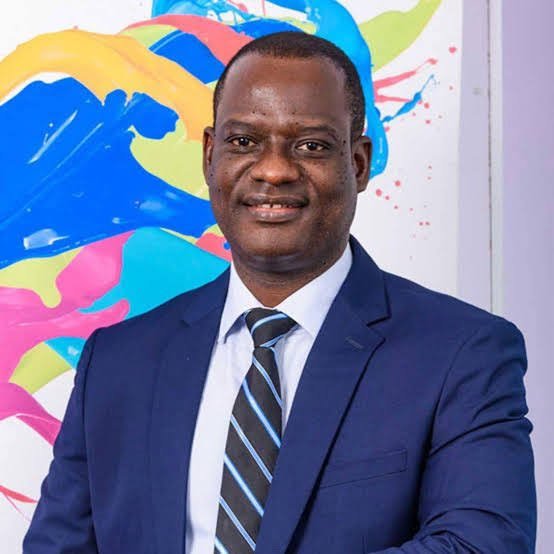
By Michael Olaogun
There are moments in the life of a nation when economic leadership requires more than political authority; it requires intellectual courage, technical competence and the willingness to make decisions based on evidence rather than assumption or political patronage. Nigeria is currently experiencing one of those moments. At a time when the country is confronting the difficult consequences of economic reforms, rising expectations, fiscal pressures and the demands of an approaching election cycle, Taiwo Oyedele’s leadership of Nigeria’s economic management deserves commendation. His role as Minister of Finance and Coordinating Minister of the Economy places him at the centre of one of the most consequential economic transitions in Nigeria’s recent history. What is particularly encouraging is his apparent commitment to building policy around data, independent analysis, measurable outcomes and continuous evaluation rather than relying exclusively on political instincts.
One of the clearest demonstrations of this approach is Oyedele’s establishment of a Ministerial Advisory Committee comprising economists, public-finance specialists and private-sector experts. The committee was created to provide independent and evidence-based advice on economic and fiscal issues, challenge assumptions, evaluate policy outcomes and help government anticipate emerging risks. This is important because evidence-informed policymaking requires government to deliberately create spaces where prevailing assumptions can be questioned. In a country where public policy has sometimes been shaped by short-term political considerations, bringing credible independent expertise into the economic decision-making process represents a welcome institutional shift. It suggests an understanding that Nigeria’s economic challenges are too complex for one ministry, one official or one school of thought to solve alone.
Oyedele’s recent presentation of Nigeria’s Reform Scorecard also provides an important example of an attempt to subject economic reforms to measurable assessment. According to figures presented by the Ministry of Finance, reforms between June 2023 and December 2025 generated or mobilised ₦20.4 trillion in incremental Federal Government resources, comprising ₦5.4 trillion in subsidy-related savings accruing through FAAC, ₦3.1 trillion in additional independent revenue and ₦11.9 trillion in incremental borrowing. The figures should not be viewed merely as evidence of government success; they should invite deeper questions about how the resources were generated, how they were spent and what measurable economic and social returns they produced. This is precisely where evidence-informed leadership becomes valuable: it allows citizens and policymakers to move beyond political claims and ask what the numbers actually mean for productivity, infrastructure, jobs, household welfare and fiscal sustainability.
Similarly, the recent call from the the Federal Ministry of Finance inviting members of the public, businesses, investors, professional bodies, civil society organisations, academia and public institutions to submit proposals for the Finance Bill 2027 comprising Taxation and Revenue Administration, Fiscal Policy and Management, Fiscal Responsibility, Transparency and Accountability, Financial and Economic Regulation among others is something that may be said not to be a “regular” practice in Nigeria’s governance systems. A new and reassuring approach indeed.
There is also something commendable about Oyedele’s recognition that economic stabilisation is not the same as economic success. He has acknowledged that the ultimate test of reform is whether it creates jobs, encourages businesses to expand, reduces inflation, strengthens the naira and improves the quality of life of ordinary Nigerians. This distinction is critical. Nigeria cannot permanently celebrate improved macroeconomic indicators while households remain under severe pressure. Stabilising the economy is the foundation; translating that stability into prosperity is the real objective. The challenge before Oyedele is therefore to ensure that the next phase of economic management moves decisively from stabilisation to inclusive growth, from reform announcements to measurable outcomes, and from fiscal numbers to human impact.
It is also important to commend the intellectual temperament with which Oyedele appears to be approaching this responsibility. Leading Nigeria’s economy requires making decisions that will not always be immediately popular. Subsidy reform, taxation, debt management, revenue mobilisation and expenditure reforms inevitably create winners and losers, particularly in the short term. Recent reports from different economic players affirms that President Tinubu’s reforms have strengthened public finances, foreign reserves and investor confidence, while also acknowledging the hardship they have imposed on ordinary Nigerians. The appropriate response is neither to dismiss the hardship nor to abandon necessary reforms. Rather, government must use evidence to identify where the burden is greatest and design better-targeted interventions to protect vulnerable Nigerians while preserving the gains of reform.
This is why Oyedele’s leadership should be judged not simply by whether he can defend government policy, but by whether he can continually improve it. Evidence-based governance requires the humility to change course when evidence shows that an intervention is producing unintended consequences. It requires listening to businesses, workers, farmers, investors and households. It requires asking difficult questions about public expenditure, debt sustainability, taxation and the efficiency of government institutions. It also requires resisting the temptation to use economic data selectively. Good evidence should sometimes confirm government decisions, but it should also sometimes challenge them. That is the real test of an evidence-informed economic leadership culture.
Nigeria’s economic environment is beginning to show some encouraging signals. Moody’s recently revised Nigeria’s sovereign outlook from stable to positive, citing stronger economic growth, improved foreign-exchange reserves and greater resilience to external shocks, while maintaining its caution about fiscal pressures and limited revenue capacity. These developments should not be interpreted as proof that Nigeria’s economic problems have been solved. They should instead be regarded as evidence that some of the structural reforms are beginning to improve confidence in the Nigerian economy. The harder task now is to ensure that this emerging macroeconomic stability translates into increased investment, productive employment, stronger businesses and improved household welfare.
Taiwo Oyedele therefore deserves commendation for taking on the responsibility of helping to steer Nigeria’s economy at an extraordinarily challenging time. But commendation should come with expectations. Nigerians should expect him to remain committed to evidence, transparency, fiscal responsibility and measurable results. They should expect him to challenge conventional assumptions, listen to independent experts and remain responsive to the realities of ordinary citizens. Most importantly, the economic team must ensure that the burden of reform is not permanently concentrated on households and businesses while the benefits remain abstract. The ultimate purpose of economic reform is not to produce impressive spreadsheets; it is to create an economy in which Nigerians can work, invest, build businesses, earn decent incomes and live with greater economic security.
At a time when political narratives are increasingly competing with economic facts, Oyedele’s emphasis on evidence-informed decisions offers an important lesson for Nigeria: good economic governance should be driven by what works, not merely by what sounds politically attractive or correct. His stewardship will ultimately be remembered by the results that emerge from the reforms, not simply the policies announced. If Nigeria can consolidate fiscal discipline, strengthen revenue, attract productive investment, expand employment and translate macroeconomic stability into improved living standards, Oyedele’s contribution to the country’s economic transformation will be significant. For now, his willingness to place evidence, expertise and measurable outcomes closer to the centre of economic decision-making is not only commendable; it is precisely the kind of approach Nigeria needs at this difficult moment.
Michael Olaogun, wrote from Abuja.
michaelolaogun2014@gmail.com