

By Shu’aibu Usman Leman
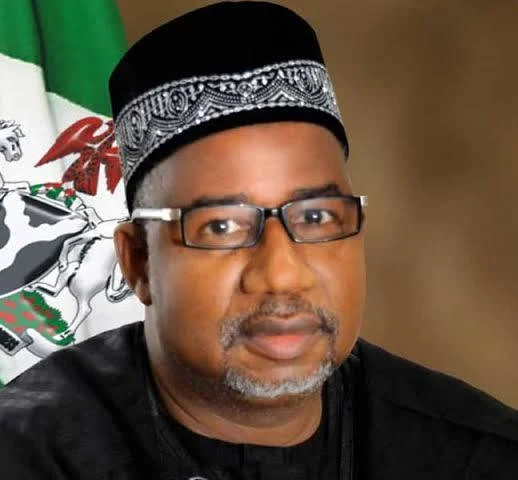
The recent allegations of terrorism financing levelled against the Governor of Bauchi State, Bala Mohammed, call for sober reflection on the standards that must guide our national discourse. In any democracy, public scrutiny is indispensable;
however, allegations of such gravity demand an equally rigorous standard of evidence.
Terrorism is not a term to be deployed lightly. It signifies one of the most serious threats to the state and to public safety. When such accusations are directed at a senior public official, they require a level of caution, responsibility, and procedural integrity that must rise above partisan considerations.
To circulate claims of this nature without verifiable proof moves the conversation away from accountability and into the realm of speculative danger. In a country still grappling with complex internal security challenges, the consequences of unsubstantiated rhetoric can be profound and unpredictable.
Nigeria’s experience with insecurity has been long and costly, measured in both human suffering and economic loss. This history reminds us that national security depends not only on military capability, but also on public confidence in state institutions and the rule of law.
In such a sensitive climate, language matters. Accusations of this magnitude are not merely expressions of opinion; they are powerful catalysts that can either reinforce justice or erode social cohesion.
It is therefore significant that a broad cross-section of respected civic leaders and community voices within Bauchi State have expressed serious reservations about these allegations. Their rejection of the claims reflects a concern for the stability and harmony of their communities.
These voices—drawn from traditional institutions, professional bodies, and civil society—are often the most reliable indicators of local realities. Their intervention suggests a disconnect between the allegations and the lived experiences of those they purport to protect.
Beyond the personal reputation of the Governor, such discourse carries wider implications for Bauchi State itself. It risks unfairly stigmatising a region that has worked diligently to promote peace and communal coexistence.
Reckless allegations do not exist in isolation. In a diverse society, unverified security claims have the potential to inflame tensions, deepen divisions, and complicate efforts to preserve national unity.
Moreover, the casual deployment of serious accusations may inadvertently undermine the credibility of our security agencies. These institutions operate through intelligence gathering, due process, and professional judgement—principles often absent from media-driven speculation.
This argument is not a rejection of transparency. Every public office holder must remain subject to the law, and where credible evidence exists, it is the responsibility of the state to investigate thoroughly and impartially.
True accountability, however, must be rooted in legal process. It is through formal investigative mechanisms and the courts—not the court of public opinion—that truth is established and justice delivered.
When allegations are introduced into public discourse without a factual foundation, they risk distorting democratic debate and blurring the line between legitimate oversight and political manoeuvring.
The media and political commentators bear a heavy responsibility in this regard. In an age of instantaneous communication, claims can achieve global reach before their accuracy is tested, often leaving lasting reputational harm in their wake.
At a time when national cohesion is a strategic imperative, sensationalism serves no constructive purpose. Nigeria’s security challenges are far too serious to be exploited as tools of political rivalry.
There are also international considerations. Stability underpins development, and unsubstantiated accusations against senior officials may project an image of instability that discourages investment and cooperation.
A more mature democracy demands adherence to ethical boundaries that place national interest above short-term political advantage. Allegations of grave criminal conduct should emerge as the outcome of due process, not as the starting point of public debate.
There is an urgent need to strengthen a culture of verification—one in which claims are scrutinised before they are amplified. Such discipline would protect the integrity of our information space and ensure genuine threats are treated with the seriousness they deserve.
Nigeria cannot overcome its security challenges amid a fog of falsehoods. A resilient state is built on restraint, responsibility, and an unwavering commitment to truth.
Ultimately, the survival of our democracy depends on the strength of our institutions and the prudence of our leaders. By choosing evidence over conjecture, we honour the victims of insurgency and safeguard the future of our communities.
…Shu’aibu Usman Leman is a former National Secretary of Nigeria Union of Journalists-NUJ