

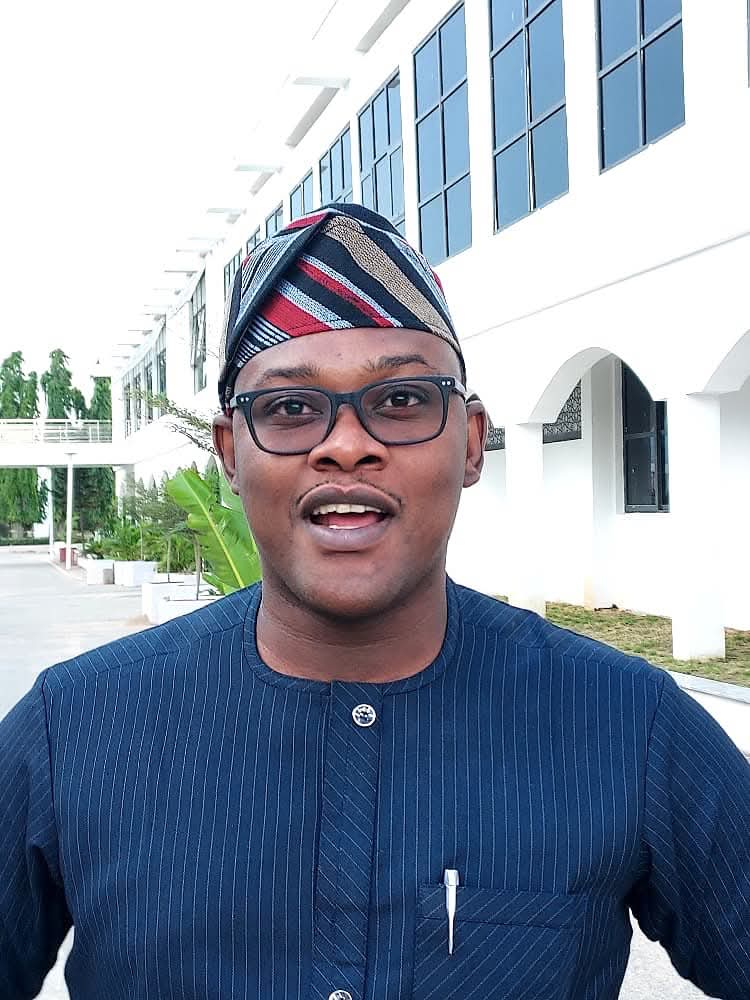
By Hassan Sani Tukur
The political fallout between Senator Rabiu Musa Kwankwaso and Dr. Abdullahi Umar Ganduje has often been misunderstood or reduced to personal rivalry. In reality, the disagreement was not personal. It was ideological.
Ganduje emerged as governor under the Kwankwasiyya Movement, a platform built on clear people-centred and socially driven policies. The movement’s philosophy placed education, healthcare, human capital development, and grassroots infrastructure at the centre of governance. It was this ideology that produced landmark programmes such as the unprecedented construction flyovers and underpasses, major roads, construction of 5km roads across all 44 local governments, foreign scholarship schemes, free education at all levels, free healthcare services, school feeding programmes, and wide-ranging empowerment initiatives for women and youth.
However, shortly after assuming office, Ganduje abruptly discontinued many of these flagship programmes. The 5km road projects were halted. Foreign scholarships were suspended. Free education and healthcare services were rolled back. Twenty-six entrepreneurial institutions, garment factories, and vocational centres spread across the state were shut down. Critical human capital programmes such as Auren Zawarawa, monthly women empowerment schemes, and several youth-focused initiatives were abandoned.
For the leadership of the Kwankwasiyya Movement, this represented a clear departure from its core philosophy. Senator Kwankwaso, as the movement’s leader, consistently explained that his political acceptance and the loyalty of the masses did not come from personal charisma or material influence, but from policies that directly touched the lives of ordinary people. From the build-up to the 2019 elections and through various public engagements, he reiterated that the strength of Kwankwasiyya was rooted in its ideology, not personalities.
It was on this basis that the fallout was widely described as a “betrayal.” Not because of personal grievance, but because, in Kwankwaso’s view, the greatest betrayal is for a beneficiary of the movement to abandon its guiding principles once entrusted with power. To him, deviating from the people-centred philosophy of Kwankwasiyya was a political and ideological breach, not a private dispute.
This context is important because it sets the foundation for understanding why the present leadership under Governor Abba Kabir Yusuf represents continuity rather than deviation.
Abba Kabir Yusuf and Fidelity to the Kwankwasiyya Ideals
Long before becoming governor, HE Abba K Yusuf made his position clear. In his campaign policy document, “Our Commitment for Kano: 2023 and Beyond,” he explicitly stated that his government would be a continuation of the Kwankwasiyya administration led by Senator Rabiu Musa Kwankwaso, whom he described as the architect of modern Kano. He committed to reinvigorating, reintroducing, and sustaining the programmes and projects initiated under the Kwankwasiyya philosophy.
Since his inauguration on 29th May, 2023, this commitment has moved beyond words into action.
Projects that were abandoned were revisited, rehabilitated, and reopened. Construction of the 5km roads across the 44 local governments resumed. The process of reconstructing, re-equipping, and reopening the 26 entrepreneurial and vocational institutions was immediately initiated. Today, less than three years into the administration, more than 15 of these institutions have been reopened, with work continuing on the rest.
The foreign scholarship programme, once halted, has been fully revived. The first batch of sponsored students has successfully completed their studies and returned, while the second batch is currently studying across institutions around the world. In addition, the Abba Kabir Yusuf administration settled over ₦2.24 billion in outstanding tuition and accommodation fees owed for 84 Kano doctors sponsored to study in Cyprus under the Kwankwaso administration but abandoned after 2015.
Education, which sits at the heart of the Kwankwasiyya ideology, has received unprecedented attention. The sector was placed under a state of emergency, with 33 percent of the entire state budget allocated to it. This has translated into massive classroom reconstruction, construction of new schools, provision of free learning materials, uniforms, bags, and shoes, the revival of girl-child education initiatives, and the return of free school feeding programmes.
Healthcare has followed the same path. Free healthcare services have been restored. Major hospitals across the state, including Hasiya Bayero Pediatric Hospital, Murtala Muhammad Specialist Hospital, Muhammad Abdullahi Wase Teaching Hospital, Nuhu Bamalli Hospital, Bela Skin Hospital, and Yadakunya Hospital, have been renovated or are undergoing renovation. Primary healthcare centres across the 44 local governments are being upgraded, with several elevated to the status of general hospitals. Through the Abba Care Initiative, over 300,000 residents have been enrolled in a free health insurance scheme.
Social welfare and empowerment programmes have also returned. The mass wedding initiative, Auren Zawarawa, continues. Infrastructure development, another visible pillar of Kwankwasiyya, is in full motion. Urban renewal projects are reshaping the metropolis, with over 50 major roads under reconstruction, twin flyover projects at Dan Agundi and Tal’udu, more than 60 rural roads under construction, and the conversion of street lighting from diesel-powered systems to solar energy. Kano today is unmistakably a construction site.
These actions clearly show that Governor Abba Kabir Yusuf has neither abandoned nor diluted the Kwankwasiyya ideology. On the contrary, he has restored it, expanded it, and given it renewed relevance.
On Political Realignment and the Question of Survival
The calls for political realignment must be understood within a broader strategic context. The current NNPP platform is deeply entangled in legal disputes that may not be resolved in time. History has shown that political movements can lose power not at the ballot box, but in courtrooms. This risk is real, and it cannot be ignored.
Today the NNPP is caught up in court orders that stop INEC from recognising some party structures. Congresses went ahead while those orders were still in place, and that may not cause trouble now but it can create big problems later. Nigerian political history teaches a hard lesson: elections as said earlier I reiterate are decided not only at the ballot box but also in the courts. Zamfara showed how legal battles can overturn political plans, and it would be naive to assume Kano is immune.
Power is not sustained by moral conviction alone. History is unkind to those who believe that good intentions of genuinely wanting better for one’s country automatically translate into victory. Many misunderstand a basic principle of politics: power is not won simply because one means well or feels entitled to it. Power is secured through alliances, strategy, foresight, and careful positioning.
Seen from this perspective, calls for political realignment are not acts of disloyalty. They are strategic decisions aimed at protecting the survival, continuity, and future ambitions of the Kwankwasiyya Movement, including its long-term presidential aspiration of Jagora.
The greatest loyalty to the Kwankwasiyya cause is not blind attachment to a platform, but fidelity to its ideals. Governor Abba Kabir Yusuf has demonstrated that loyalty through governance. Ensuring that those ideals endure beyond legal uncertainties and political traps is not betrayal; it is political wisdom.
Hassan Sani Tukur is the Senior Special Assistant on New Media To His Excellency Governor Abba Kabir Yusuf