
Understanding The OGP Initiative And Role Of The Media
By Abdullahi Yusuf
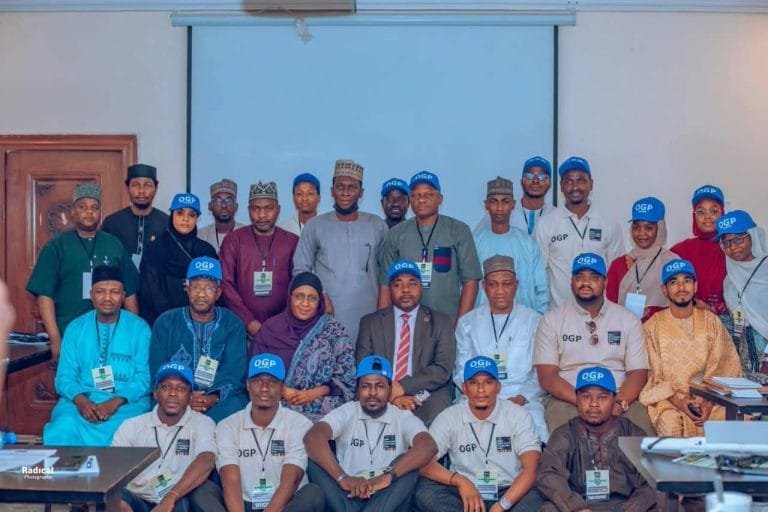
On Friday, November 13th,2026, practicing Journalists in Kano State converged on Dutse, the serene capital of Jigawa State, on the invitation of the Kano State chapter of the Open Government Partnership(OGP) for a very important programme aimed at promoting inclusive governance.
The media professionals largely drawn from the Correspondents’ Chapel of the NUJ and the Kano State Government’s Senior Special Reporters(SSRs) were moved to Dutse by the OGP leadership in Kano State for a one-day workshop essentially organised to outline to them the concept of the OGP initiative and the role expected of them in the implementation of its agenda.
Because it was realized that before the workshop,many,if not most of the media professionals had a faint idea about the OGP initiative and their role in its implementation.
In fact,a question to that effect was thrown to the participants of the workshop and the answers confirmed the situation.
So, the well-attended workshop was about making the Journalists understand the OGP initiative and their expected role in its implementation towards the attainment of transparency, accountability and inclusive governance in Kano State.
The OGP Coordinator in the state, Musaddiq Adam, explained to the participants that the Open Government Partnership was established in 2011 to provide a platform for governments, civil society organisations and citizens to collaborate in promoting transparency, accountability and inclusive governance.
Musaddiq said Nigeria joined the OGP initiative in 2016, while Kano State became a member in 2017 and subsequently a subnational member in 2018.
He, however,identified political resistance, inadequate public awareness, weak institutions, limited access to information, funding constraints and capacity gaps as some of the challenges affecting effective implementation of the initiative.
The OGP Coordinator stressed that the government, civil society organisations, the media and citizens must work together to ensure that the initiative’s commitments translate into improved service delivery and better governance.
He then urged journalists to intensify investigative reporting and monitor government policies and projects to ensure transparency, accountability and improved service delivery to the people.
In his contribution to the conversation, the Permanent Secretary, Establishment, Office of the Head of Civil Service, Kano State, Abba A. Danguguwa, highlighted the seven thematic areas of the state’s 2024–2026 OGP Action Plan.
Danguguwa listed them as fiscal transparency, access to information, citizens’ engagement, access to justice, anti-corruption, service delivery and climate change.
He explained that the action plan was designed to strengthen citizens’ participation in budgeting, improve access to public information, promote inclusive governance and address challenges in education, healthcare and agriculture.
In the light of the discussions,Dr Abdussalam Muhammad Kani, a lecturer with the Sa’adatu Rimi College of Education, Kano State, challenged journalists to move beyond reporting government announcements and adopt evidence-based investigative reporting to assess the performance of government.
Thus, Kani advised journalists to use the state’s OGP Action Plan as a reporting guide by examining budget documents, procurement records and audit reports, as well as visiting project sites to establish the actual situation.
He also emphasised the need for journalists to verify information, seek responses from relevant authorities, protect their sources and maintain professional independence.
The Acting Chairperson of the Kano State Public Complaints and Anti-Corruption Commission (PCACC), who is also a member of the OGP State Steering Committee, Hafsat Kutama, in her submition,described the media as a vital partner in the fight against corruption and the promotion of open governance.
Kutama stressed that transparency, public participation and accountability could only be achieved when citizens had access to accurate information and were adequately informed about government activities.
“The media is the bridge between the government’s commitments and the citizens’ expectations. You are the mirror that reflects the reality of governance to the people,” she said.
She, therefore, urged journalists to move beyond sensational reporting and embrace investigative and data-driven journalism capable of exposing governance gaps, holding public officials accountable and highlighting government interventions.
Similarly, the state Commissioner for Public Procurement and Project Monitoring, Nura Ma’aji, represented by the Permanent Secretary, Abdulrazaq Haruna, urged journalists to take a more active role in monitoring government budgets, procurement processes and project implementation.
Ma’aji noted that media practitioners required adequate knowledge and professional skills to scrutinise public expenditure, track constituency projects and assess the implementation of government commitments.
“The media is not a bystander in this partnership. You are a critical stakeholder. You are the bridge between government and the governed. You are the watchdog that holds power to account,” he said.
The commissioner reaffirmed the state government’s commitment to ensuring timely access to information, publishing budget and procurement data, promoting beneficial ownership transparency and creating an enabling environment for responsible journalism.
It has, however, been established that journalists have been encountering difficulties in accessing public information which they need to produce news reports about happenings in the polity, including government activities.
Against this backdrop therefore, the state Commissioner of Information and Internal Affairs, Sunusi Bature Dawakin Tofa, dropped a cheering hint at the workshop, that the process of domesticating the Freedom of Information Act in the state had reached an advanced stage, with the committee responsible expected to be inaugurated in the coming weeks.
Dawakin-Tofa also informed the gathering that the State Government is developing a Media and Communications Policy to strengthen the participation of journalists in governance.
Represented by the Director of Information in the ministry,Malam Aminu Yassar, the Commissioner explained that the proposed policy would promote media freedom, protect journalists, improve access to public information and encourage greater citizens’ engagement in government activities.
He also disclosed that government agencies had been directed to establish functional websites and social media platforms to ensure wider public access to official information.
He added that the Ministry of Information would establish a legal services department for the first time, to facilitate access to justice for media practitioners and support the principles of open governance.
Thus,the workshop featured presentations on the Open Government Partnership and the role of the media in translating its commitments into public-interest news stories.
It also examined the importance of technology, effective monitoring and evaluation, citizens’ participation and collaboration among government institutions, civil society organisations and the media in improving public service delivery.
The participants were encouraged to adopt professional journalism practices that amplify citizens’ voices, particularly those of underserved communities, while promoting transparency, public trust and inclusive development.
It became apparent at the end of the engagement, that the invited media practitioners had now understood the fact that the Open Government Partnership(OGP) is about openness in governance and citizens’ participation that should be facilitated by the mass media.
.