

From Umar Dankano, Yola
The United Nations Children’s Fund (UNICEF), in collaboration with the Swedish International Development Cooperation Agency (SIDA), has called on communities in Adamawa State to take ownership of and protect water facilities provided in their localities to ensure their sustainability and continued benefits.
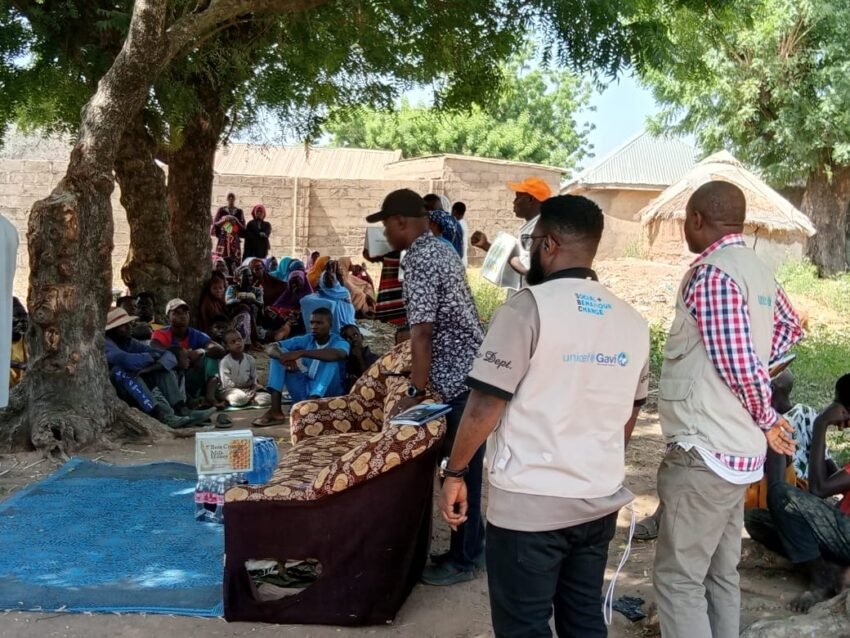
UNICEF Social and Behaviour Change Specialist at its Bauchi Field Office, George Eke, made the call during a town hall meeting with residents of Dobotare-Ribadu community in Fufore Local Government Area of Adamawa State.
Eke explained that Adamawa is among the states frequently affected by public health emergencies and disease outbreaks, with its humanitarian challenges further compounded by the displacement of residents.
He said the intervention, funded by SIDA and implemented by UNICEF, seeks to raise awareness about the dangers of unsafe drinking water, open defecation and poor hygiene practices, while improving access to safe water in underserved communities.
According to him, the project will rehabilitate non-functional boreholes and construct new ones in communities without access to potable water.
He disclosed that the existing borehole in Dobotare-Ribadu would be upgraded into a standard motorised, solar-powered facility to ensure a more reliable supply of clean water.
Eke, however, stressed that the sustainability of the intervention would depend largely on the community’s commitment to protecting and maintaining the facility.
He also urged residents to maintain personal and environmental hygiene to prevent waterborne diseases and other public health challenges.
Responding, residents of Dobotare-Ribadu welcomed the intervention and pledged to take responsibility for protecting the facility for the benefit of their families and the wider community.
One of the residents, Musa Shaibu, expressed appreciation to UNICEF and SIDA for the hygiene sensitisation and provision of potable water, revealing that his family previously depended on stream water for domestic use without understanding the health risks associated with consuming untreated water.
He said the awareness campaign had changed his understanding of safe water consumption and promised to adopt better hygiene practices.
Similarly, Helen Emmanuel and Hadiza Abubakar Baba said the knowledge gained from the sensitisation would help reduce the incidence of cholera and other waterborne diseases in their communities.
They also pledged to share the information with neighbouring communities to promote wider awareness and improved hygiene practices.
The residents further expressed their readiness to establish a community committee to oversee the proposed solar-powered borehole, mobilise contributions for its maintenance and engage local security personnel to safeguard the facility.