

By Hadiza Musa
The Executive Chairman and CEO of the Presidential Initiative on Compressed Natural Gas and Electric Vehicles (PI-CNG & EV), Ismaeel Ahmed, says the Federal Government wants to be remembered for introducing lasting and sustainable alternatives to fuel subsidy in Nigeria.
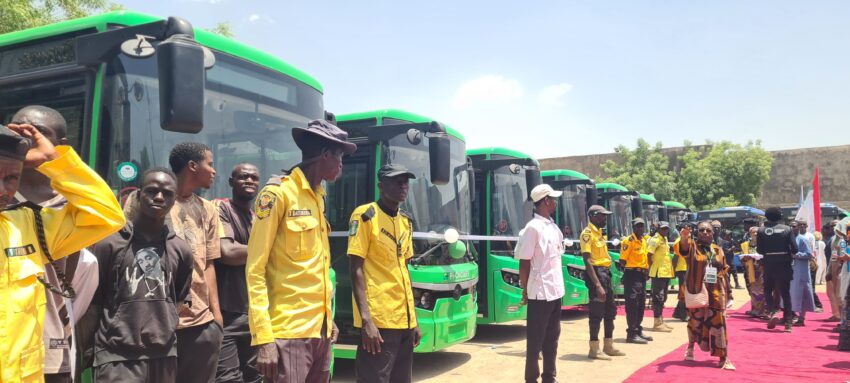
Ahmed made the statement on Thursday during the launch of the CNG and EV Northern Corridor Programme held in Kano.
According to him, the initiative is aimed at reducing transport costs, creating jobs, and promoting cleaner energy use.
He said the programme was born from President Bola Ahmed Tinubu’s directive to provide a long-term solution after the removal of fuel subsidy.
“We want to be remembered as the government that introduced sustainable alternatives through CNG and electric mobility, and changed how Nigerians move in a productive way rather than through handouts,” he said.
He added that the initiative has already recorded progress across several states, including vehicle conversions, training of technicians, and expansion of refuelling infrastructure.
“Over the last 20 months, we have worked with industry players and state governments to build the foundation for nationwide adoption. We have rolled out conversion programmes in more than 28 states and supported over 58 refuelling stations,” he said.
Ahmed added that more than 7,000 Nigerians have been trained under the programme, while hundreds of conversion partners have been onboarded to support its expansion.
Ahmed said the government is working to ensure that Nigerians can easily convert their vehicles without financial stress.
He noted that efforts are also being made to expand access to gas supply and infrastructure across major cities and transport routes, especially in Northern Nigeria.
Also speaking, Kano State Governor, Abba Kabir Yusuf, described the project as a major boost for the state’s economy, noting that Kano’s position as a commercial hub makes it central to the success of the programme.
He said transportation remains the backbone of Kano’s economy.
He added that any policy that reduces transport costs will directly improve the lives of residents.
“Transportation is central to economic life in Kano. Anything that reduces cost and improves efficiency will benefit our people directly,” the governor said.
Representing the Vice President, Senator Ibrahim Hassan Hadeija said the initiative is not just a transport reform but a broader economic strategy.
He said Nigeria’s large gas reserves present an opportunity to reduce dependence on expensive fuel systems while strengthening energy security.
Hadeija noted that rising transport costs affect almost every sector of the economy, including food prices and logistics, making the transition to CNG and EVs very important.